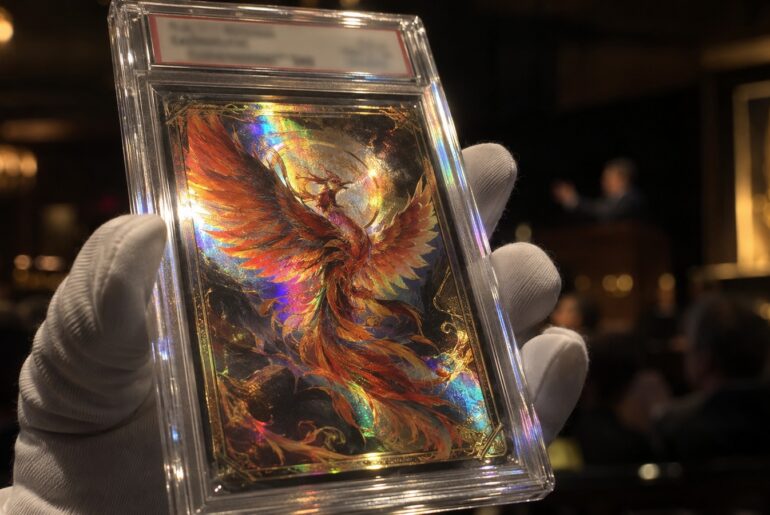
Transaction Value Up 2.8 Times After 30th Anniversary Expansion Pack Launch
67% of High-Value Trades Led by the 30s and 40s Generation
Nostalgic Childhood Memories Fuel Demand
As the Pokémon card game marks its 30th anniversary, collectors in their 30s and 40s are flocking to the domestic secondhand market. The generation that enjoyed Pokémon in their childhood is returning to card collecting, prompted by the launch of a commemorative expansion pack. With not only new purchases but also more sellers putting up cards they have kept for years, Pokémon cards are becoming established as major collectibles in the secondhand trading market, surpassing their role as simple toys.

Pokemon Cards. Yonhap News Agency
According to the secondhand marketplace Bungaejangter on September 21, the number of Pokémon card listings and users searching for Pokémon cards from September 1 to 17 surged by 272% and 337%, respectively, compared to the same period last year. In particular, users in their 30s and 40s accounted for 58.7% of the total transaction value, exceeding half the market. While their share among buyers was 41.6%, they accounted for as much as 67.2% of high-value transactions over 150,000 won.
‘Nostalgia-Driven Recollection’ Led by the 30s and 40s Generation
The average purchase price among users in their 30s and 40s was 1.5 times higher than that of those in their 20s or younger. Considering that the Pokémon card game was launched in 1996, it suggests that those who encountered Pokémon as children are returning to the collecting market in this symbolic 30th anniversary year.
The growth in transactions became even more pronounced following the release of the commemorative expansion pack. After the simultaneous worldwide release of the 30th-anniversary expansion pack on September 16, the number of Pokémon card listings from September 16–17 increased by 1.8 times compared to the daily average from September 1–15.
The number of sellers rose by 2.3 times, transaction value by 2.8 times, and the number of deals by 1.5 times, respectively. Particularly notable was the fact that about 37% of sellers during this period were new, with no history of selling Pokémon cards in the previous 90 days. This indicates that many users put up cards they had stored at home for sale for the first time in light of the commemorative expansion pack release.

Figures of Eevee and Pikachu are displayed at the Pokémon pop-up store set up in Olive Young N Seongsu, Seongdong-gu, Seoul, last May. Photo by Yonhap News
Transaction prices were diverse. Among Pokémon card listings uploaded in the past 30 days, 36.6% were priced below 5,000 won, taking up the largest portion, and those priced between 10,000 and 30,000 won accounted for 16.8%. Meanwhile, high-value listings above 150,000 won made up 11.1%. Over the past year, 54% of listed cards were sold within one week of being listed.
A Bungaejangter official said, “The launch of the new expansion pack seems to have attracted both long-time collectors and sellers who have kept cards for years to the market.” Bungaejangter is also holding a promotion in which up to 100% of Pokémon card sales fees will be paid back during the expansion pack release period from September 16 to 29.
Gaining Spotlight as an ‘Investment Asset’ Beyond Collectibles
Pokémon cards are drawing attention as investment assets, especially rare high-value cards, thanks to a global fan base and scarcity. According to Card Ladder data cited by the Wall Street Journal last year, Pokémon cards recorded a return of approximately 3,821% since 2004, compared to the S&P 500’s increase of 483% during the same period. However, these figures are based on specific cards and do not represent the average investment performance of all Pokémon cards.
Peter Levin, founder and managing director of Griffin Gaming Partners, an investment firm focused on gaming and sports companies, recently told the Hollywood Reporter that, in extreme cases, Pokémon cards could become “world currency.”
Levin cited the strength of the Pokémon card market as the fact that anyone can purchase card packs at trading card stores, Walmart, Costco, Walgreens, and similar outlets, while everyone has an equal chance of obtaining rare cards. He explained that the ease of public participation in collecting serves as a foundation for the market’s continued growth.
The trading card market regained attention during the COVID-19 pandemic. With people spending more time at home, individual investors flocked to the collectibles market. The trend coincided with the so-called subculture investment boom—such as with Gamestop—leading trading cards to emerge as new investment targets.

Pokemon Cards. Photo by Getty Images Bank
High-profile transactions by well-known collectors also heightened the market’s attention. Five years ago, YouTuber Logan Paul purchased the rare “Pikachu Illustrator” card for $5 million, setting a world record at the time. Early this year, he sold it for $16 million, raising the record once more.
A Market Shaped by ‘Nostalgia’ and Scarcity
The attention on Pokémon cards is fueled not only by investment sentiment but also by generational nostalgia and the long-standing popularity of the franchise. Pokémon first appeared as a Nintendo video game in 1996 and has since expanded into TV programs, movies, video games, trading cards, and more, growing into a global IP.
As of the end of March this year, the cumulative number of manufactured Pokémon cards exceeded 85 billion, with products sold in over 90 countries across the world. Analysts estimate that the global trading card market could reach a size of up to $50 billion a year. Major entertainment companies such as Disney and Hasbro are also accelerating market growth by releasing collectible cards featuring popular characters.
Hot Picks Today
Did the Chinese Take All the Unemployment Benefits Too?… Foreign Workers Received a Record 113.4 Billion Won
However, not all Pokémon cards rise in value like investment products. Card prices can vary widely depending on print volume and scarcity, character popularity, preservation condition, and the grading of professional evaluation institutions. Since this is not a market where you can buy and sell at any price like stocks, liquidity is low, and the risk of counterfeiting increases for higher-priced cards.
This content was produced with the assistance of AI translation services.
© The Asia Business Daily. All rights reserved. Unauthorized AI training and use prohibited.