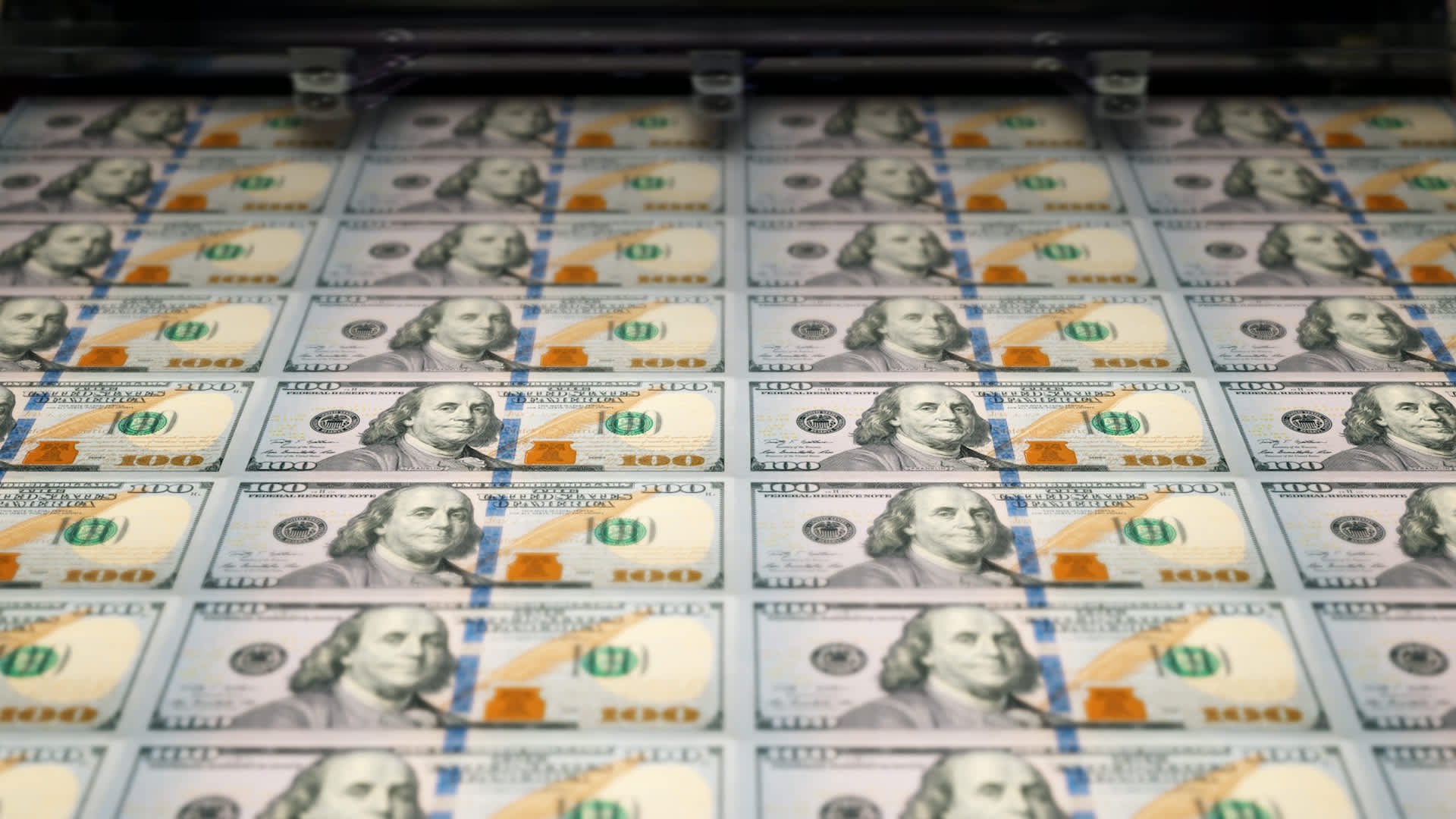
If you’ve taken a rudimentary economics course, you know that the market clearing price is determined by the intersection of consumers’ willingness to pay (demand) and producers’ capacity to sell (supply).
While cost-push inflation is certainly possible, game companies generally have low overhead, with nearly all its budget going to labor costs. Wage growth [has fallen short of CPI](https://www.cnbc.com/2022/12/14/why-salaries-in-the-united-states-dont-keep-up-with-inflation-.html) since interest rates started rising. So, whatever theoretical cost that publishers are “passing on to the consumer” should track lower than inflation.
Furthermore, the inflation argument seemingly ignores the entire price history of games. Nominally speaking, the MSRP of triple-A games has remained flat at $59.99 since at least the early 1990s, meaning that the price of games has actually decreased in real terms. There are many reasons for this, including:
1. Competing digital entertainment options for customers (e.g. streaming services, smartphone apps/games)
2. New development tools including automation
3. A larger talent base of game developers that has reduced the cost of skilled labor
Are any of these economic drivers any less relevant now than a few years ago? Perhaps #3 is *slightly* curtailed by wage growth. But anyone who applies a broad metric like CPI to explain a price increase of a Zelda game has a poor intuitive grasp of economics.
A far more plausible explanation is that Nintendo is merely opportunistic, and understands that a mid- to late-cycle Zelda game is likely to appeal more to hardcore fans, who exhibit greater willingness to pay. This is a form of third-degree [price discrimination](https://en.wikipedia.org/wiki/Price_discrimination). We saw the exact same thing with Majora’s Mask, which had an MSRP of $79.99 upon its release in October 2000. Yet, no one would cite that as an example of inflation.
There is nothing inherently wrong with this; it is simply market forces at play. But attributing the price increase to inflation is simply ignorant.
**tl;dr** Inflation is, at most, a minor contributing factor in short-term price fluctuations.
by X-Boner
15 Comments
Looking back at the 90s when games were $50-$60 blows my mind now. That was a lot of money back then. $70 nowadays isn’t as much. Hell, I spent $16 at jimmy Johns today at lunch, that’s horseshit right there.
Dont bring that reasonable logic in here! Some out here will die for nintendo!!! Lol
I may be misremembering, but didn’t Majora’s Mask cost that much because it came with an extra peripheral?
A far more plausible explanation is that Nintendo is merely opportunistic, and understands that a mid- to late-cycle Zelda game is likely to appeal more to hardcore fans, who exhibit greater willingness to pay. This is a form of third-degree price discrimination. We saw the exact same thing with Majora’s Mask, which had an MSRP of $79.99 upon its release in October 2000. Yet, no one would cite that as an example of inflation
That’s the only answer and nothing more.
Good post. But the tl;dr really is that goods and services are worth what the market will bear. The new Zelda will likely sell nearly as well at $70 as it would at $60, and the overall revenue will be higher. If that price is too high for the market, then sales will tank, and Nintendo will have to sell it cheaper. But I don’t think so.
lol what…. is your argument really “well games have cost this much for a long time so why now?”
Like… none of this refutes the fact that video game prices have remained the same while the value of the dollar has DECREASED a lot over the past 20+ years. That means that game companies have been gradually making less money (although they have created extra revenue streams with DLC and whatnot) while video game development costs skyrocketed with the HD era. We’re lucky that games didn’t increase in price sooner.
And maybe the fucking recession and the record high inflation we’re currently experiencing have something to do with it? 🙄
I agree with you it’s Nintendo be opportunistic and greedy, but many fans, bots and shills are gonna defend it
Nintendo Announces 10 Percent Pay Raise For Devs Despite Lower Profits.
Nintendo Announces 10 Percent Pay Raise For Devs Despite Lower Profits.
1. Competition doesn’t mean much if you aren’t competing with others, or if your product is coming from something that was at the top of the food chain.
2. Fair
3. More people working on something means theoretically, more people need to be paid. Nintendo can theoretically keep the prices down, but they are also increasing wages now. More people being paid more = something changing with pricing.
I never wanted TOTK to be 70, but its not the end of the world either. If the quality stays from BOTW, then I will buy it. If not, I won’t.
And counterpoint for the “Zelda’s from later in a consoles life will see more people willing to pay, regardless of price” isn’t true.
Ocarina sold 7.6 million, but Majora sold 3.3 million, which is halved from Ocarina’s units sold.
The gap is wide with the Gamecube. Windwaker sold 4.43 million, while Twilight Princess (Gamecube) sold 3 million less.
Over on the Wii, Twilight Princess (Wii) sold 7.42 million, while Skyward Sword sold 3.67 million. All the later Zelda titles sold worse than their original counterparts.
Also, before we go there, digital distribution does not mean they just put the game on their storefront. The storefront needs to be upheld, there needs to be servers to hold people so it doesn’t crash, it needs maintenance to keep it from crashing, and you need people that specialize in keeping up all this. All of those things (alongside some other stuff I didn’t mention) costs money to do.
With physical media, you need to produce and ship it, but once its at a store, nothing else needs to be done with that game. That just leaves the owners of the store to keep everything in balance. With digital, you are the store owner, and its not just one game.
I’ll stop it there.
you know a companies main goal is to make money, right?
[the switch launched in 2017](https://i.imgur.com/TWiuo1e.jpg)
The value of 70 bucks is different to each person. Inflation affects everyone. What’s interesting is Nintendo’s demographic of customers. Casual gamers, Nintendo fans and families. As everything gets more expensive, most people prioritize the basics and luxury goods second. The new Zelda could be a 70 bucks game, but is still to high for a lot of people.
>A far more plausible explanation is that Nintendo is merely opportunistic, and understands that a mid- to late-cycle Zelda game is likely to appeal more to hardcore fans, who exhibit greater willingness to pay. This is a form of third-degree price discrimination. We saw the exact same thing with Majora’s Mask, which had an MSRP of $79.99 upon its release in October 2000. Yet, no one would cite that as an example of inflation.
No one would cite that because that wasn’t the MSRP. If you paid more than $59.99, you either purchased it from a store who marked it up higher than MSRP, misremembered, or it included tax.
I’ve been scouring the internet for ads and I’ve found them. Not only is that not tue.
I looked up other mid to late-cycle Zelda Games (Skyward Sword, Twilight Princess, BOTW), and….. um it’s not true for those games either. In fact I’ve found examples where Nintendo was more than generous to promote: Skyward Sword came with CD, Windwaker which is a mid-release came with OoT with pre order.
Here’s the facts:
**N64 – Ocarina of Time (2 years after console release)**
September 1996 – N64 release
November 1998 – Ocarina of Time release (2 years after n64 release)
Price: $59.99
[https://oldgamemags.tumblr.com/post/145022932752/nintendo-power-114-nov-98-get-zelda-from/amp](https://oldgamemags.tumblr.com/post/145022932752/nintendo-power-114-nov-98-get-zelda-from/amp)
**N64 – Majora’s Mask (4 years 1 month after N64 release, 1 year 1 month before GC release)**
October 2000 – Majora’s Mask release (4 years 1 month)
Price: $59.99 (you say $80)
Late 2000- $59.96 at Walmart. Note: that a Strategy Guide is also on sale.
https://n64thstreet.com/post/632998132079312896/wal-marts-winsome-nintendo-ad-for-late-2000/amp
I also found this archived post from November 2000 $59.99 –
[http://www.winternet.com/~mr_n64/reviews/n64/z2/z2rev.html](http://www.winternet.com/~mr_n64/reviews/n64/z2/z2rev.html)
Best Buy March 2001 ad –
[https://www.reddit.com/r/gaming/comments/ud1kyp/2001_weekly_best_buy_circular_ad](https://www.reddit.com/r/gaming/comments/ud1kyp/2001_weekly_best_buy_circular_ad)
​
**GameCube – Wind Waker (1.5 year after game cube release)**
September 2001 – Game Cube release
March 2003 – Wind Waker release (1 years and 6 month after)
Price: $49.99. Preorders include Ocarina of Time and Master quest disc.
[https://www.nintendoworldreport.com/pr/8382/wind-waker-most-pre-ordered-game-in-history](https://www.nintendoworldreport.com/pr/8382/wind-waker-most-pre-ordered-game-in-history)
**GameCube – Twilight Princess (5.25 year after GC release, 1 month after Wii release, LAST First Party game for Gamecube)**
December 2006 – Twilight Princess GameCube (5.25 year after GC release, 1 month after Wii release, LAST First Party game for Gamecube. A late-cycle game)
Price: $49.99 (can’t imagine it being higher price than Wii Version)
**Wii – Twilight Princess (Launch Title)**
November 2006 – Wii release
November 2006 – Twilight Princess Wii (Launch title)
Price: $49.99
[https://blackfridayarchive.com/Ad/GameStop/2006/8](https://blackfridayarchive.com/Ad/GameStop/2006/8)
​
**Wii – Skyward Sword (5 years after Wii release, late cycle release. 1 year before Wii U)**
November 2011 – Skyward Sword release (5 years after)
Price: $49.99. Black Friday deal includes 25th anniversary CD:
[https://blackfridayarchive.com/Ad/GameStop/2011/2](https://blackfridayarchive.com/Ad/GameStop/2011/2)
​
**Wii U – Breath of the Wild (4 years 4 months after Wii U, late cycle release. Launched same time as Nintendo Switch. Late release due to delays.)**
November 2012 – Wii U release
March 2017 – Breath of the Wild (4 year 4 month after)
Price: $59.99
Tl;dr…. We never saw Nintendo exploit harcore fans by raising prices for mid-late cucle Zelda games. It’s utter non-sense. 21+ years is a long time to remember exactly what you paid… easy to misremember all the details. Even if you paid $80 or more, doesn’t mean the MSRP is $79.99 unless it was some sort of really special collectable.
Different stores sell games at different prices.
Gosh, people here are just swell.