Performance per watt is something that isn’t really brought up in discussions about console hardware. Performance per watt has become a rising topic among mobile hardware, laptops and even some desktop PCs (Apple Silicon, AMD Zen 4, etc). The more in-depth discussions revolving around ARM vs x86, RISC vs CISC and TSMC nodes. Efficiency plays a huge role in peak performance, thermals and the obvious battery life in a mobile device.
This is why I believe Nintendo was ahead of the curve (at least in the console arena) for going with an ARM based SoC for their latest console. Now, in 2023, the entire tech industry is heading in that direction. The Tegra X1 was literally the best chip Nintendo could have chosesn for the Switch. No other mobile chip came close in GPU capability and features. Most of the performance issues seen on the Switch are caused by the slow LPDDR4 memory being single-channel and not the GPU.
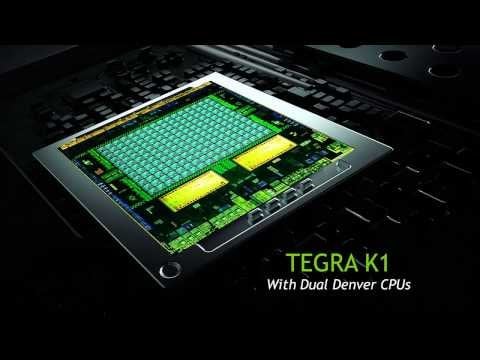
In regards to my argument that the Switch has the best performance per watt of any console, let’s go back to the predecessor to the Tegra X1, the Tegra K1.
​
[The impressive performance per watt of the Tegra K1. Source: Nvidia](https://preview.redd.it/d3u46am6cm2c1.png?width=2317&format=png&auto=webp&s=88a4093d9e3b6a928be57e9bbfd7f927b5564183)
[Nvidia CES 2014 Keynote – Tegra K1](https://www.youtube.com/watch?v=TW8StWcz6Aw)
Back in their 2014 keynote, Nvidia stated that their new K1 chip handily outperformed both the PS3 and Xbox 360 while consuming just 5 watts. That’s 1/20th the power. The Tegra X1 has double the efficiency and double the GPU power. Yes, Nintendo did downclock and power limit the X1 that is found in the Switch, but even then it still vastly outperforms the PS3, 360 and their last console, the Wii U. When you pair that with Nvidia’s excellent NVN API (underrated how great Nvidia did here), you have a lot of performance for something that consumes the same amount of power as your iPhone.
The GPU in the Switch was so good, it wasn’t until the A12 Bionic that we got something that bested it in the mobile space. [Notebookcheck.net comparison chart](https://www.notebookcheck.net/X1-vs-A12-Bionic_6612_10166.247596.0.html)
​
[Source: Digital Foundry, Eurogamer](https://preview.redd.it/1wd4hz3ccm2c1.png?width=2006&format=png&auto=webp&s=4c8bf578fd1fea40d48664ae1901b0ef4826f155)
[Digital Foundry – The New Nintendo Switch Review: ‘Mariko’ Tegra X1 Tested In Depth!](https://www.youtube.com/watch?v=3E2PZ5-IVDw&t=330s)
I feel that even today the Switch easily has the best performance per watt of any console. The X1+ equipped Switch (2019+ models) consumes just 6.5 watts playing Tears of the Kingdom. And that game uses a deferred renderer with PBR materials. Even today, that is very impressive.
The PS5 just idling (doing essentially nothing) consumes more power than the Switch running a full game (PS5 draws 70+ watts just in the home menu). When running a game, the PS5 comsumes well over 200 watts. [Video showing PS5 power draw](https://www.youtube.com/watch?v=t8mP5v5vhRk). RISC based architectures just makes more sense on a console. x86 just has too much legacy bloat for a specialized device like this.
I feel that the power effciency of the Switch is *massively underappriciated.* I mean, look at the Steam Deck. It is roughly 5-6 times more powerful than the Switch, but can consume over 25W. A marginal victory when you are comparing a 16nm chip to a 6nm one from a few years ago. ARM based SoCs can just be designed to be far more efficient with wider cores and thus better IPC. Nintendo’s hybrid approach should be celebrated as it will only become more viable as ARM SoCs improve.
All this being said, I am very excited for the Switch 2 (or whatever it will be called). It will surely outperform the Steam Deck while consuming a fraction of the power, making it truly a mobile masterpiece.
by VenZoah
46 Comments
And to think you have PC video cards using 600 wattage by themselves I’m not ditching PC either 8 like my gaming PC it’s just sometimes a hybrid system like switch is needed
Ethical gaming 😎
Given more and more consumers in other industries partly make decisions based on sustainability, this is something Nintendo / Nvidia should be proud of and use in marketing material
This is a good point and I think a good direction things are going, since everyone is chasing the Switch’s success now. With a battery, YOU HAVE to be efficient. You can’t just go whole hog all the time, otherwise you degrade the value of being portable. Thanks for the post, this is a good perspective on things.
The Tegra X2 was out before the switch launched, so the X1 wasn’t the “best” chip it could have used. the X2 was both more powerful and more efficient.
It is neat that the switch is so efficient but saying it is the most efficient console isnt saying much as standard home consoles like the PS5 and XSX dont really care about it. Youre comparing apples to oranges.
As for the steam deck its power per flop is actually close to the switches even despite being handicapped by an X86 architecture. Since the steam deck needs to play PC games using ARM would have been a lot more difficult.
I do agree ARM was a good move though, and very forward thinking. I’m optimistic of the Switch 2s performance but blowing the steam deck away seems rather optimistic given the steam decks pretty high starting point already. Hard to say, hopefully I’m wrong on that front.
dandori issue indeed
The Switch is the first time since the GameCube that Nintendo made a legitimately strong console for the time it released, this goes unappreciated because it was designed as a handheld first. If Sony bothered to launch a Vita successor in the same time frame, it wouldn’t have been much more powerful.
This was by necessity I’d imagine, they needed something that could replace the Wii U AND run Breath of the Wild with 0 compromises. A single downgrade from the Wii U version would’ve been a PR disaster. A more modest jump like SNES -> GBA or Wii -> 3DS wouldn’t have done the trick, they needed to go big.
Nintendo has used ARM CPUs for all mobile systems since GameBoy Advance for cost and efficiency. Xbox One/Series, PS4/5, and SteamDeck use AMD64 for performance.
Both are correct for different reasons.
Why are you comparing mobile chip to home console.. this is apple and oranges.
They werent ahead of the curve, they needed to be efficient for it to be a handheld…. Nobody buys a console based on power efficiency. Handhelds, maybe.
>I feel that the power effciency of the Switch is massively underappriciated. I mean, look at the Steam Deck. It is roughly 5-6 times more powerful than the Switch, but can consume over 25W. A marginal victory when you are comparing a 16nm chip to a 6nm one from a few years ago. ARM based SoCs can just be designed to be far more efficient with wider cores and thus better IPC. Nintendo’s hybrid approach should be celebrated as it will only become more viable as ARM SoCs improve.
As someone who was not terribly interested in the Steam Deck, I feel the need to stick up for it a bit here – the Steam Deck is trying to natively run PC games made for x86 hardware with no software changes required on each game’s respective developers’ ends, whereas any game on Switch has to be specially ported specifically to the Switch.
Mind you, Valve has done a ton of work to make running regular Windows games on the Linux-based Steam Deck much easier and more efficient, but nevertheless, it’s still a situation where the goal is that a dev can release a game on PC with no intention of putting it on the Steam Deck, and assuming it’s not too far beyond the Deck’s capabilities to run, the Deck can just download it and play it without the dev needing to lift a finger. As far as I know – and please, correct me if I’m wrong – you would need to do a fair bit of work to port a game to an ARM based system like the Switch.
Dude this post is really well written and researched, thanks for this
Watt for watt the strongest competitor
Just wait until they actually work on custom silicon with Nvidia for their next console.
Great write up. I’ve always felt from a performance aspect, the Switch punches so well above its weight that even now with the release of SM Wonder it is certainly capable of being visually stunning to the gaming contingent that runs PS5 and PC.
Kind of why I’ve fallen back on my Switch. Steam Deck is such a cool device, but I genuinely don’t feel comfortable taking it as my primary for long flights or travel. Sure, I can play non-demanding games, but my Switch can also play Zelda, Metroid, and Mario for longer.
Also tru to use 4ifir, performance boosts very high
I have an Asus z13 with a 4050 gpu.
This recent era of 4000 series GPU had shown that high wattage usage is not optimal.
For instance, a full powered, 120w mobile 4050 will only be about 25% faster than the 4050 in the Z13 running at 50w.
This wasn’t the case with the 3000 series where low wattage equaled very poor performance.
Soon we will probably see handheld using low wattage, high spec GPUs. The Switch showed the popularity of the hand held. Steam Deck, Ally are barely nibbling at the foot leather.
Thanks for bringing up this interesting topic!
I recently realized how much power my PC consumes, even though I’ve always been a passenger on the PCMR train and especially so in the last couple of years because I always had this urge to buy the newest and fastest CPU and GPU.
However, when I started looking at the numbers, it dawned on me that playing a game on the PC can easily pull 400-500 watts from the wall, while my Switch consumes almost 100 times less. With how much time I spend in games, this roughly meant that I pay about EUR500 per year for playing on the PC.
It’s amazing how much less the Switch costs to run, which probably has a big positive environmental impact globally as well, with all the millions of kids out there having access to Nintendo IPs and Minecraft on a console that draws 5 watts of power from the wall, instead of some big-ass furnace of a PC.
I really hope the Switch successor follows closely in its steps!
The thing about the deck is that you can limit it to consuming 10-12w full system power and still be 5 times more powerful than the Switch.
After that it just hits a cliff of efficiency. You can tweak it to be way more efficient in the perf per watt category, just like the Switch doesn’t use the full clocks its chip is capable of running at, rather, it stays in the best part of the power efficiency curve, you can do so too with the Deck.
How about performance per game lmfao
“ The PS5 just idling (doing essentially nothing) consumes more power than the Switch running a full game (PS5 draws 70+ watts just in the home menu)” me reading this while my PS5 is literally idling in the home menu….
this post needs more recognition , well done!
​
one of the reasons i want to see the switch 2 is i want to see what they can do with the tech
Shame that the switch doesn’t have a web browser like PSP…
Still unacceptably weak
Depends if you include the Steam Deck as a console or not. Performance per watt is a lot better on Steam Deck vs Switch. Which isn’t surprising as it’s a newer architecture running on modern 6nm silicon, but it is more efficient.
>I mean, look at the Steam Deck. It is roughly 5-6 times more powerful than the Switch, but can consume over 25W. A marginal victory when you are comparing a 16nm chip to a 6nm one from a few years ago.
Do does Switch or Steam Deck have better performance per watt? If Steam Deck is not a console, then what competition does Switch have? Vita? Wii U?
How does Switch compare to iPhone? I bet iPhone outperforms switch.
The Nintendo Switch is the first ever and so far only ARM-based mobile gaming console released on the market.
So yeah, it being the most efficient is only logical, we would have a problem if it wasn’t the case…
meaningless point its still under powered
Can you compare it to apple’s a17 pro and m3 procs?
Gotta love the few apple and oranges comparisons to further wank the system. But at least a few posters made mention of them.
Say what you want about Nintendo, but they absolutely achieve the maximum performance for their hardware.
Isn’t it the only ARM based console ever made?
With the lack of advancement in battery technology, power efficiency remains a vital attribute for portable/handheld devices. That’s why I’m not entirely convinced with your statement that the Switch 2 will outperform the Steam Deck. In my opinion, devices like the Steam Deck aren’t really portable – their power consumption requires them to be plugged into an AC wall socket to unlock their full potential which limits their usage somewhat ( which begs the question, who not just use a laptop ? ). I think Nintendo will want the Switch 2 to be a “true” handheld device, like the original Switch, that can last several hours without needing recharged. As such, that means power efficiency is going to have be excellent and/or accept reduced performance as a compromise.
Amazing post, OP. Thank you for the research and care.
I don’t show respect to my own switch. Most games I own (only about 10 total across digital and physical) have not been beaten. And I actively avoid using the console or buying games on it because I think they’ll be un-anti-aliased disasters.
I wish I could just clear my mindset and start over with this console and love it for what it is.
My game library:
– Mario odyssey – unbeaten
– breath of the wild – unbeaten
– animal crossing – played first 4 months of pandemic. Never saw autumn or winter seasons.
– hollow knight – unbeaten (3 hours logged)
– Pokémon let’s go Pikachu – unbeaten, great game but lost cartridge
– Pokemon shield – beaten
– Pokemon legends Arceus – unbeaten, far into story and liked it
– Pokemon shining pearl – unbeaten, absolutely horrible
– Pokemon scarlet – unbeaten, graphical/performance disaster at launch
– Mario kart – amazing game
– let’s dance 2022 – for the kids
– Xenoblade Chronicles DE1 – unbeaten, great game so far
First you talk about soc, then you talk about the whole console. They are not the same.
For example: The SteamDeck has a SSD that consumes more power than normal emmc, and if you plugging in microSD that’s another story.
Also you did not talk about soc capability: the gpu on SD can support more modern feature/encoder: if you have to do something that require those encoders, then the switch has to run on CPU, which is much slower and using more power than dedicated hardware.
Also the performance does not scale linear with power consumption. The SD run normally at 15w, but does not mean it’s 3x slower if it’s run at 5w
Too bad I can’t play anything from after 2025 that doesn’t look like shit on it.
In going back to my Steam Deck.
Have fun with your shitty console.
is this even true? you can turn down the watts on steam deck
also, OP actually thinks switch 2 will be more powerful then the steam deck? thats hilarious. it wont have 90hz, because all the nintendo games are low fps anyway. nintendo has always been years behind every console in terms of performance.
I guess if we don’t consider the SteamDeck in this discussion you are right. But once you take SteamDeck into account it beats Switch in perf per Watt due to its newer RDNA 2 6nm APU.
You are looking at it when maxing out the SoC but you can run the SteamDeck in a more energy efficient mode which puts it further ahead in perf per watt
This is what I call good engineering. Performance and efficiency, some words that were forgotten in the technical world and that’s why Nintendo is such a great software developer.
Switch is incredibly weak for its time and this is copium
Yes the steamdeck can draw 25w, but we should also look at how it runs the game at 25w. It can achive higher visuals and double the frame rate at that power draw. If we truly want an equal comparison, we should compare the same game on the 2 systems at equal graphical settings, resolution and frame rate
Any argument talking about a positive with switches performance or grpahics is immediately invalid. As a switch lover 80 of the games are empty or look absolutely hideous and still run like dog water. Great example the pokémon games. Hell even the 2d legend of zelda remake had issues.
The engineering and design of the switch is absolutely amazing.
It isn’t brought up because it’s a useless metric lol.
I mean, yes, but it’s also worth noting that every current phone and tablet far exceeds it in this regard. Obviously the Switch wins among consoles. It is the only one, or at least the newest one, that effectively uses a phone chip. But phones have long since surpassed the likes of the A12 and Tegra X1. I am wondering what would have happened if Nvidia stayed in this space. Maybe Apple wouldn’t hold the lead in SoC design.
People confuse terms all the time and none more than ‘efficiency’.
**The Switch does not consume much power, but at the same time it also does not output much performance. On the flip-side, a PS5 consumes a lot of power, but also outputs a lot of performance. Efficiency is a measure of a fixed unit of ‘work’ per unit of energy or power used to do so. You cannot fundamentally compare ‘efficiency’ by quoting power draw running Tears of the Kingdom, and a PS5 running Spiderman 2. They are not equivalent fixed units of work.** If a PS5 was capable of running ToTK via the same software (API) and hardware routes as the Switch, we have no idea how much more *work* it could output at 200W.
As an easy example of the power != efficiency example, we can take a look at some modern PC products that people rattled on about being “inefficient” when they launched. The RTX 4090 can use up to 450W at full load, but at full load it is also doing a metric crap load of work, meaning that it actually comes out as the most efficient card ever made.
It isn’t wrong to care about raw power use on a handheld console, I would argue it is fundamentally more important than ‘efficiency’, but equating the two without any set measure of work is not viable.