
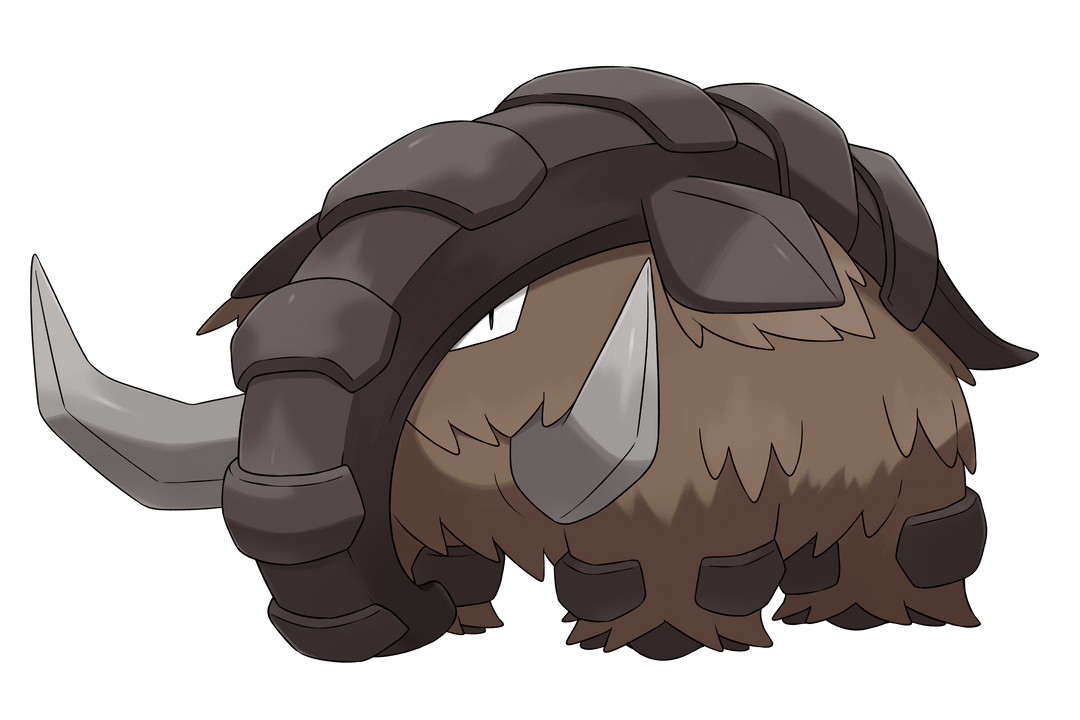
Amanese Phanpy: It roams the harsh, tundra-like landscapes of the north, where rocky terrain and sparse vegetation dominate. Its thick, woolly coat insulates it from the biting winds and freezing temperatures of its environment, while its Rock-typing reflects its bond with the rugged stones and cliffs that form its home. Despite the desolate surroundings, it thrives by foraging on tough, scrubby plants that cling to life between rocks and by breaking apart frozen ground or boulders with its sturdy tusks to uncover lichen and roots.
Its long, fur-lined trunk is both a tool and a weapon. It uses it to shower itself with water from glacial streams or to clear snow and debris to reach hidden vegetation. When water sources are scarce, it digs shallow pits in the permafrost, creating small reservoirs that benefit not only itself but also other Pokémon in the ecosystem. As a social creature, it forms small herds that travel together, working as a group to forage and defend against predators. Their bonds are strengthened through playful trunk taps and games involving tossing rocks, though their immense strength often turns these games into displays of power.
This Normal- and Rock-type Pokémon builds its den by carving out pits or burrows at the base of cliffs or near rocky outcrops. The walls are reinforced with stacked stones and packed earth, providing shelter from the freezing winds. To mark its territory, it scratches deep grooves into nearby boulders with its tusks, warning rivals to stay away. These marks also serve as navigation aids for its herd, helping them find their way through the vast, featureless tundra.
Even as juveniles, they exhibit incredible strength, easily carrying large stones or even an adult human on their backs. Their large, shaggy ears act as fans in warmer weather and amplifiers for sound, allowing them to detect distant threats in the otherwise quiet tundra. This Phanpy variant is a symbol of resilience and community, perfectly adapted to its unforgiving environment and playing a vital role in the ecology of its tundra home.
Amanese Donphan: It has adapted to life in harsh, tundra-like environments, where rocky terrain and sparse vegetation dominate the landscape. Its massive, curved tusks are composed of a dense, stone-like material, perfect for breaking through icy boulders and digging up tough vegetation buried beneath snow or frost. Its thick, shaggy fur insulates it against the freezing winds, while its fossil-like hide offers unmatched durability, protecting it from both predators and the unforgiving environment.
Herds of this Pokémon roam the tundra, carving pathways through the rocky wilderness with their powerful tusks. These pathways often serve as vital routes for other Pokémon and even humans traveling through these inhospitable regions. The herd survives on hardy vegetation, such as mosses and shrubs, and occasionally uproots small trees using its immense strength. During the harshest winters, this Pokémon uses its tusks to chip away at frozen streams to provide water for its herd and other Pokémon sharing its habitat.
In battle, this variant curls its stone-armored body into a massive ball and rolls at incredible speed, sending shockwaves through the frozen earth as it charges. Its attack is powerful enough to shatter glaciers and demolish rocky outcroppings, leaving behind flattened terrain that provides easier movement for its herd. Its dual Normal and Rock typing reflects its primal resilience and close connection to the rugged tundra it calls home.
Legends among locals speak of ancient migrations led by this Pokémon, where entire herds reshaped the icy landscape with their movements, leaving behind valleys and pathways still visible today. This Pokémon is revered as both a guardian of the tundra and a keystone species, helping maintain balance in the frozen, rocky wilderness.
by Not_An_Actual_Squid