
Carnivoran Pokémon is one of the largest groups of Pokémon currently known, and arguably the largest group inside of the Mammalian Pokémon group. Traditionally, the group has been divided into two large subgroups: the Canine Pokémon and the Feline Pokémon, and also an outgroup that includes Wildeon (Eeves savageum) and it’s closely related species. The variety of forms and specializations inside this group is remarkable, there are several cases of bipedalism that evolved separately several times. Canine Pokémon in particular is the largest group inside of the Carnivoran Pokémon, counting several incredibly diverse and specialized species, especially in the Dog Pokémon subgroup.
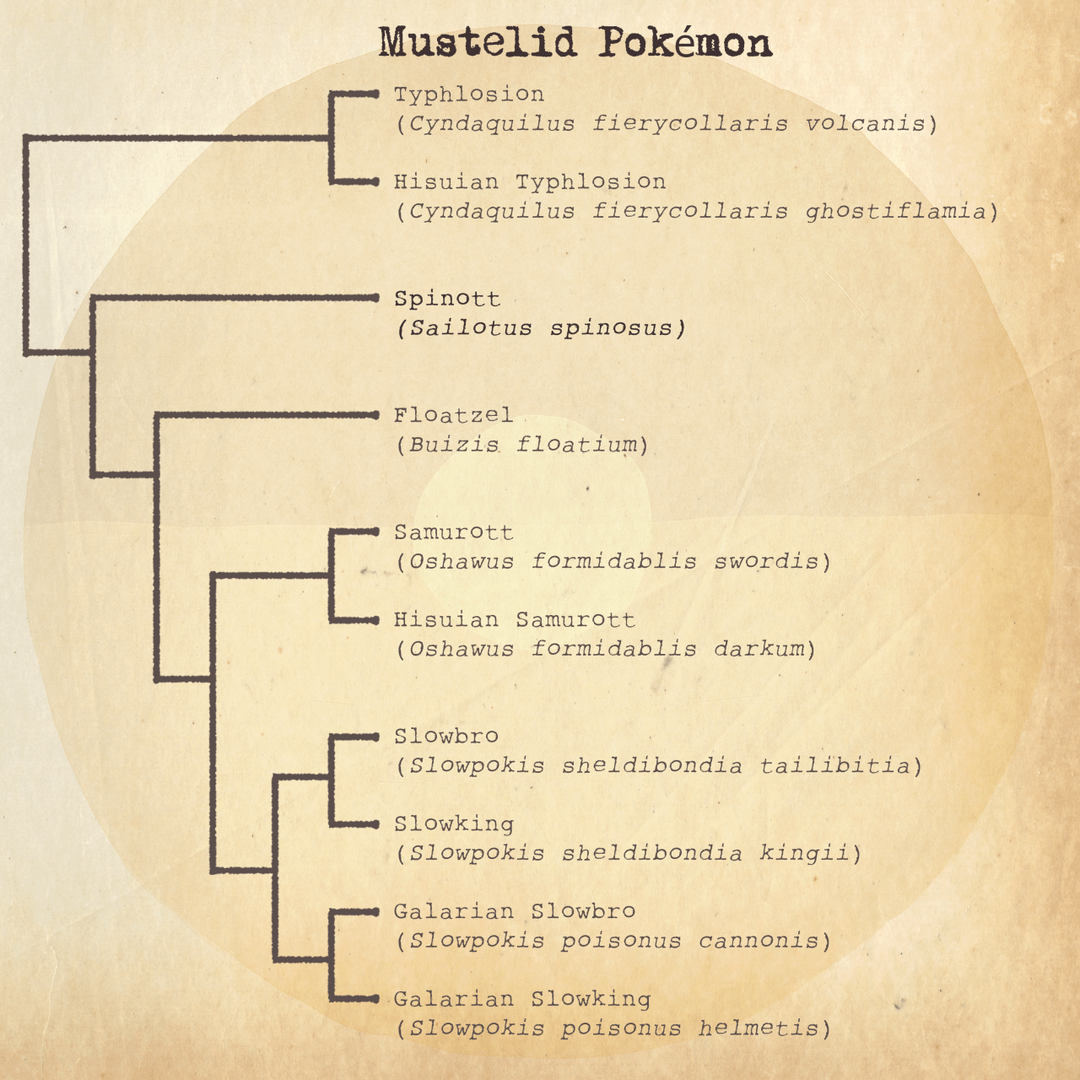
Closely related to the Dog Pokémon is another large group of Carnivoran Pokémon, the Mustelid Pokémon group. One particular branch of this group has developed several characters for a semi-aquatic lifestyle.
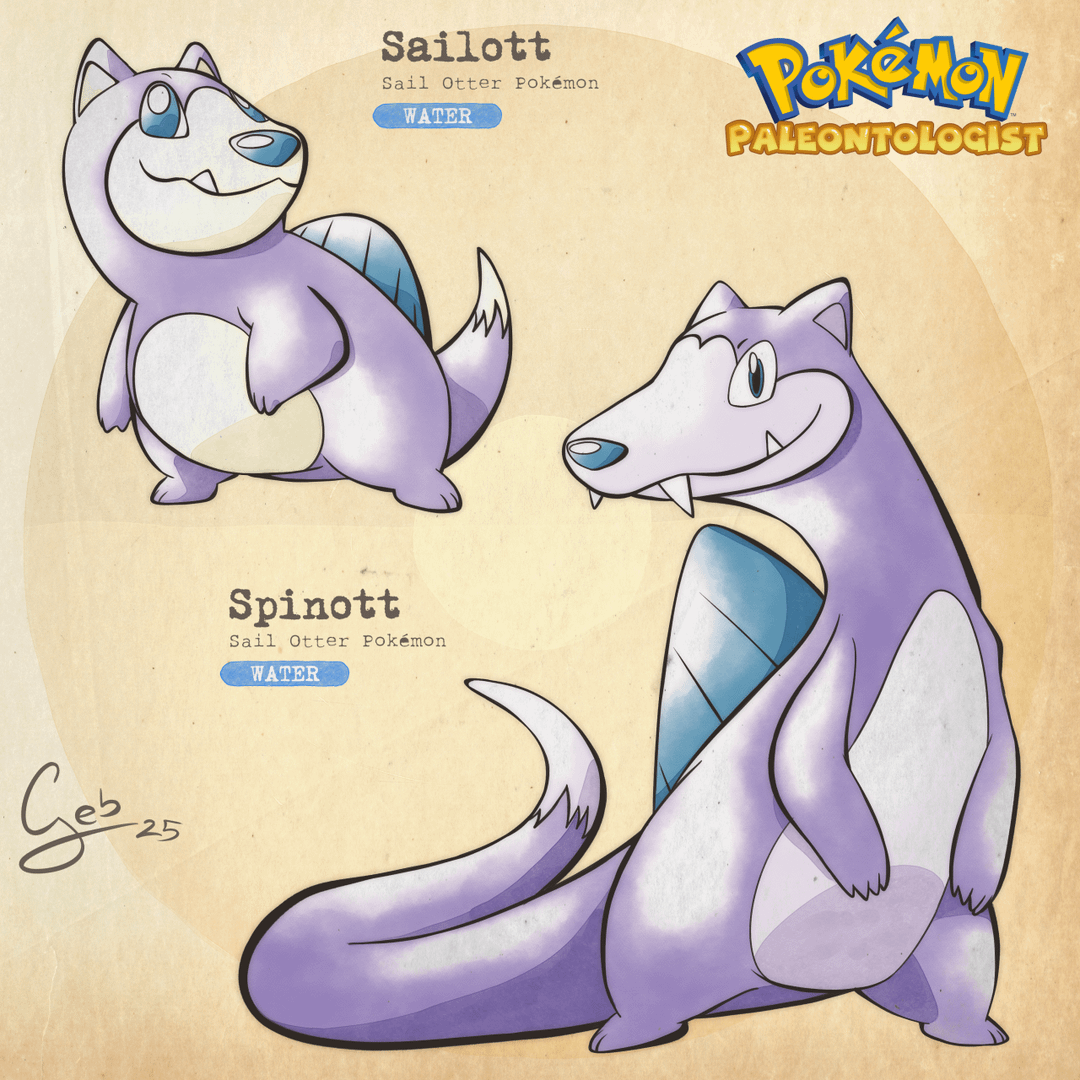
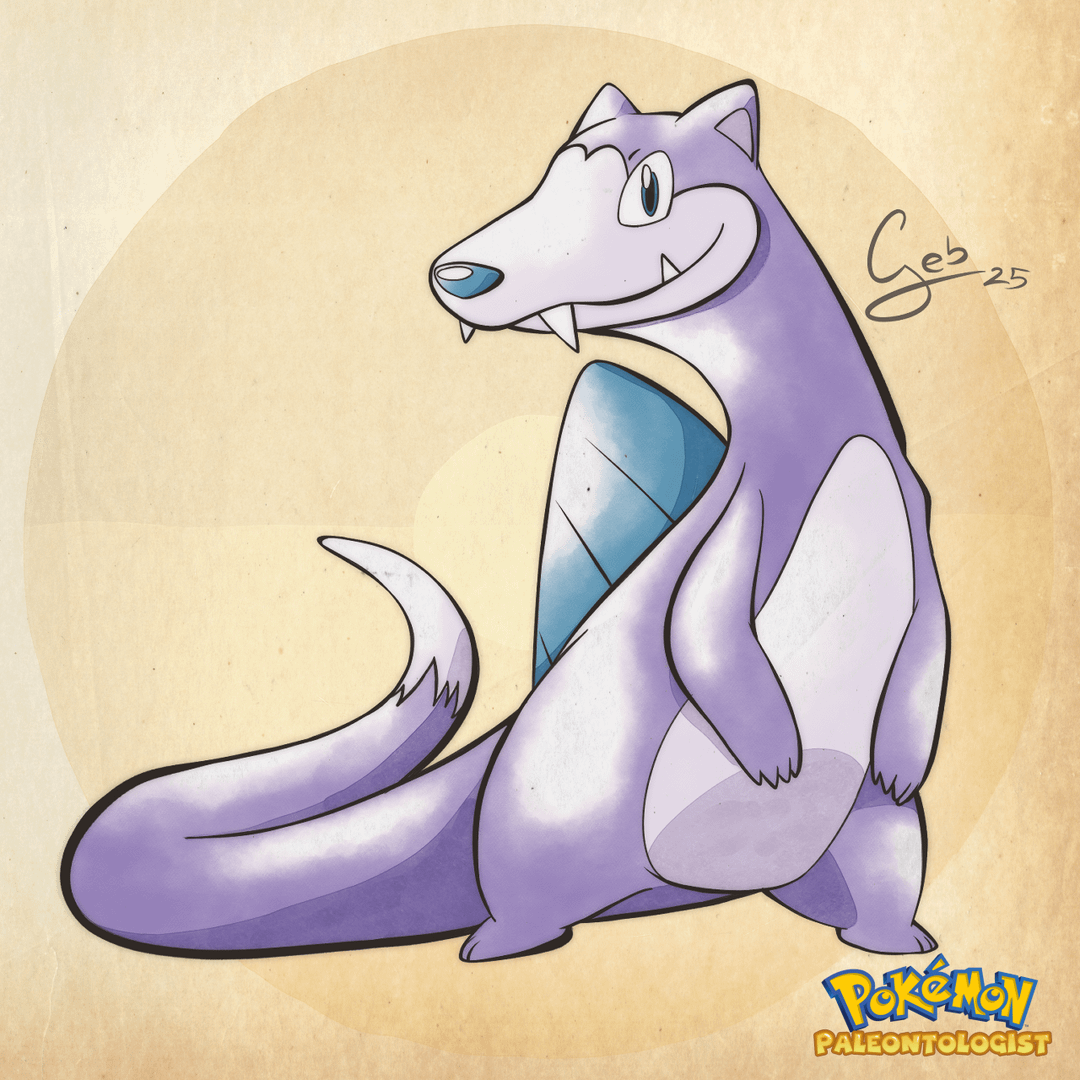
Recently, a new extinct species belonging to this group has been described from several fossilized remains. Spinott (Sailotus spinosus), was also a semi-aquatic Pokémon with an elongated body and a very long tail. The species also had a long snout with several conical teeth useful to hunt Fish Pokémon and other aquatic preys inside the water. Lastly, Spinott shows an interesting character: a large sail on its back, a flat but robust structure sustained by elongated processes on the vertebrae. This character has been associated with the semi-aquatic lifestyle, as it would be very prominent while the Pokémon is floating on the water, even if almost entirely submerged. This is useful when trying to scare off predators and rivals, in fact a large and colorful sail indicates a healthy and strong individual. Another idea, which does not contradict the previous hypothesis sees the sail as a mean to quickly change direction in the water while swimming at high speed.
by GebF