One of the most interesting and diverse groups in the Pokémon phylogenetic tree is the Arthropod Pokémon group. The largest subgroup in the Arthropod Pokémon is the Insect Pokémon group, which is easily distinguishable due to the presence of a maximum of 6 limbs and wings. Insect Pokémon are, in fact, the first Pokémon to evolve wings and flight, and covered most airborne ecological niches during the Carboniferous.
Unique to the Insect Pokémon is also the cocoon stage, usually the second stage of ontological evolution. It is a mostly stationary stage in which the Pokémon covers itself in a very hard shell, a way to maximize the amount of energy gathered and prepare for their final evolution stage.
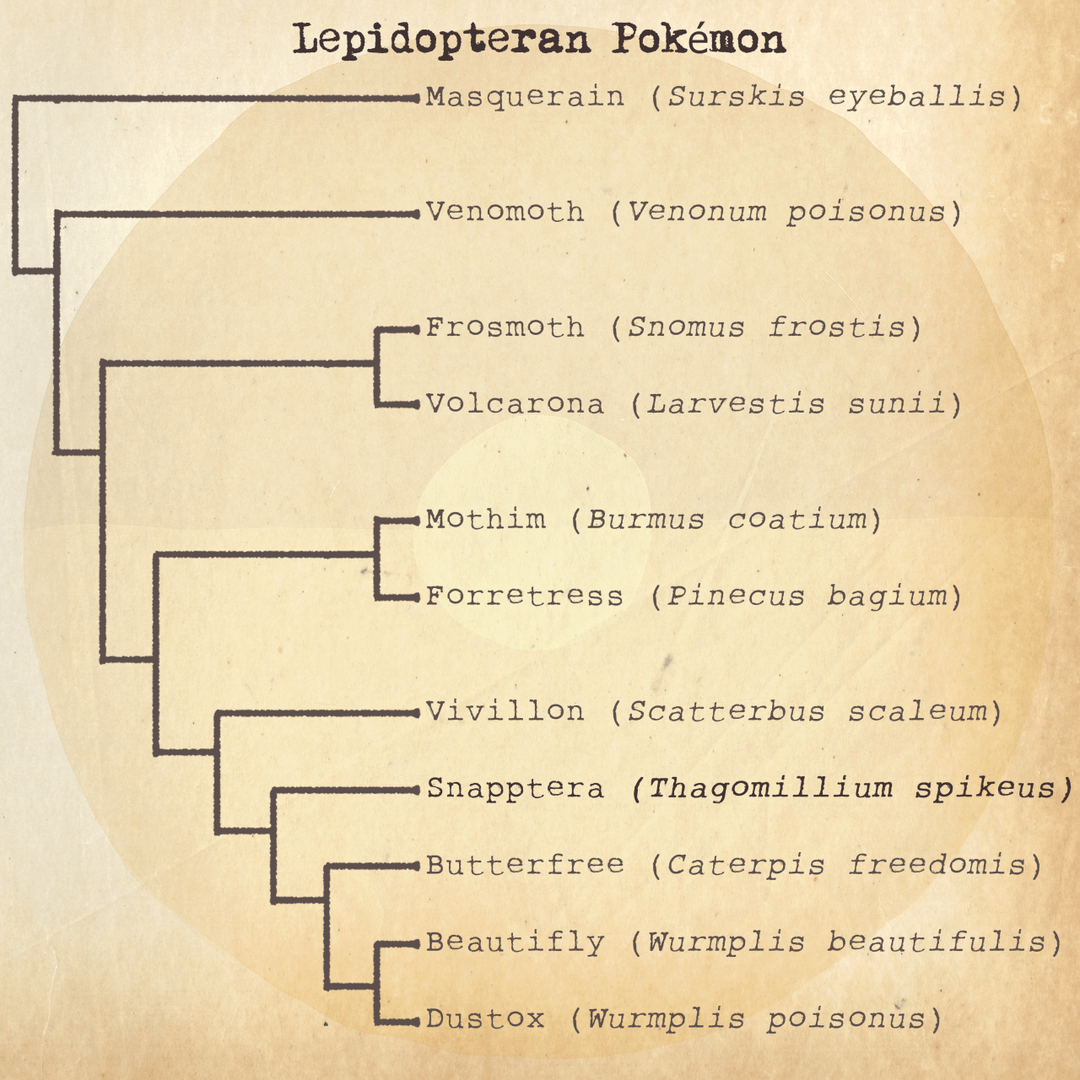
Not every Insect Pokémon has wings or a cocoon stage, it is currently unknown if these two characters evolved in their common ancestor or if they evolved multiple times separately. Currently the wings have been considered an ancestral character, while the cocoon stage seems to have evolved several times.
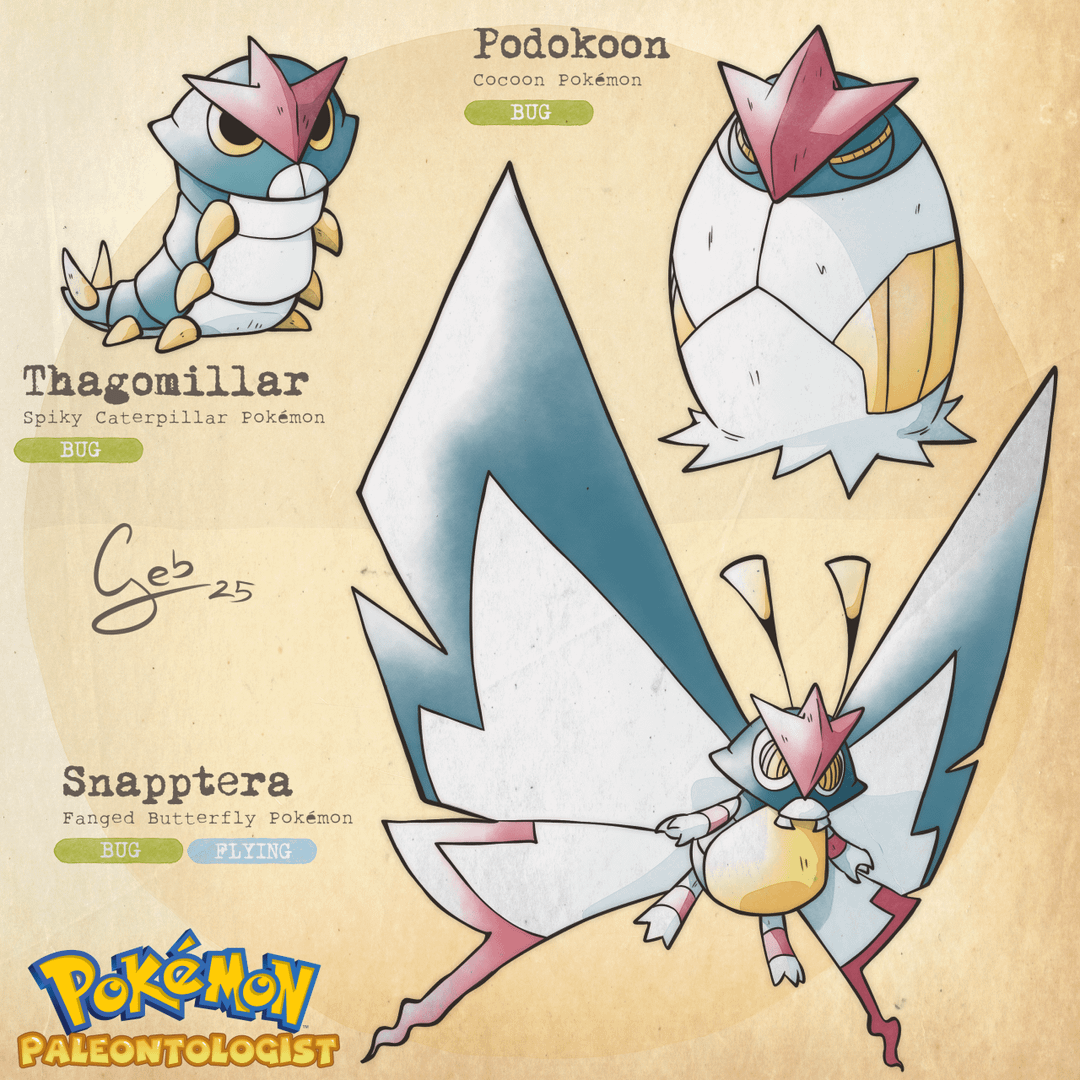
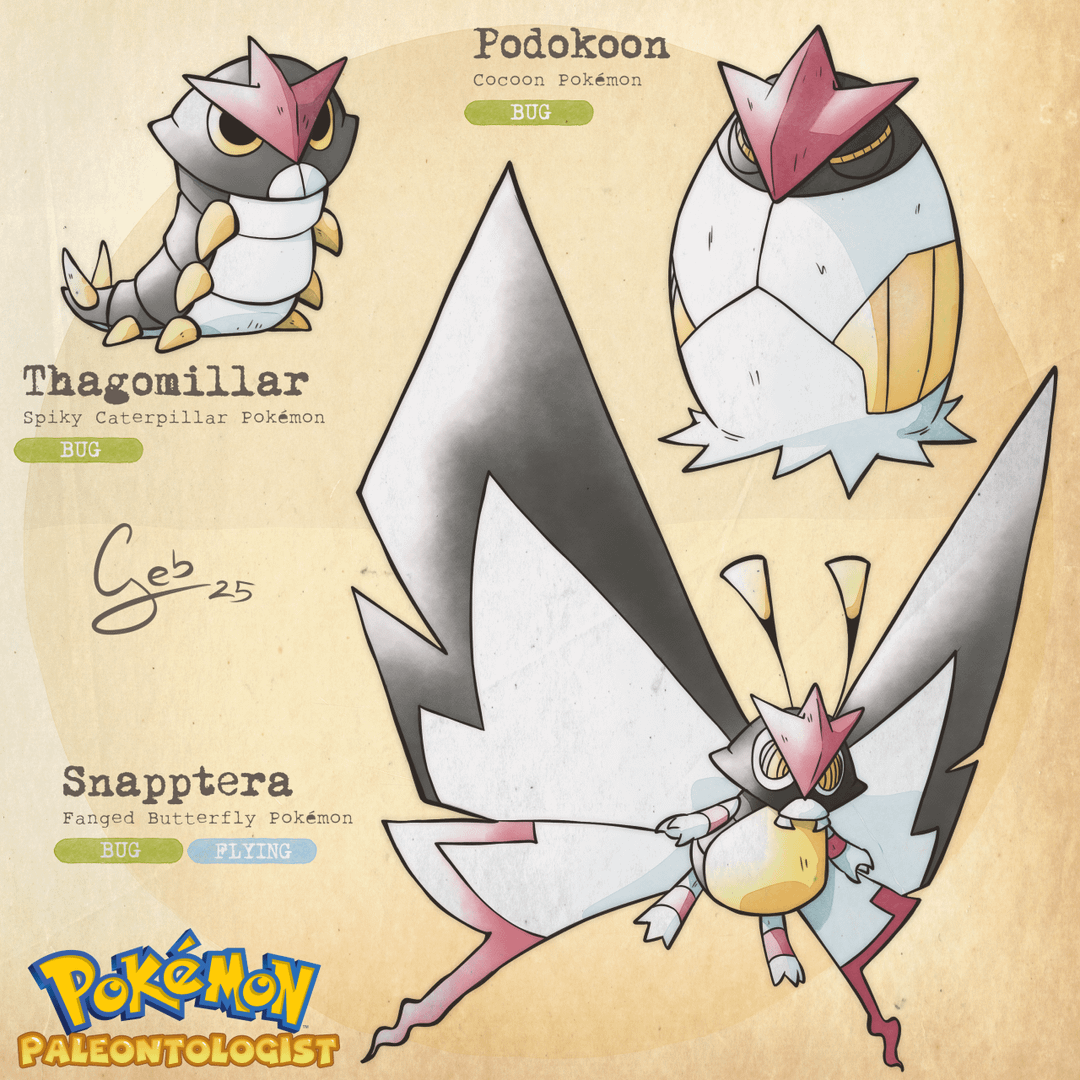
A new extinct Lepidopteran Pokémon species recently discovered in several fossil amber remains shows a very peculiar cocoon stage, further corroborating the idea that cocoon stages evolved separately in different subgroups. In Snapptera (Thagomillium spikeus), the largest Butterfly Pokémon species ever discovered, the cocoon stage Podokoon seems to encase most of the body, only leaving the head exposed. This has been interpreted as a basal condition, one of the first examples of true cocoon stages in Lepidopteran Pokémon. The silk covering is resistant but flexible, allowing some (albeit limited) movement compared to other cocoon stages.
The larva stage Thagomillar also shows large spikes on the tail end of the body, possibly used as defense against predators. The possibility of them having some poisonous ability has not been confirmed nor denied as of yet.
Adult Snapptera males have longer wing “streamers”, possibly used to attract females during mating seasons, and their long clawed appendages could indicate a carnivorous lifestyle.
by GebF