Part 1 – Introduction.
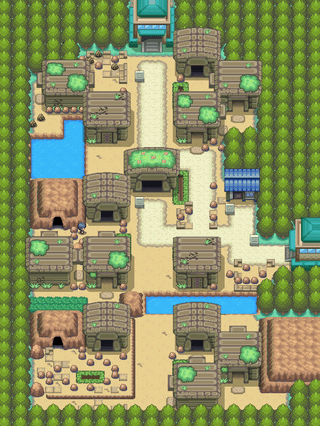
The Ruins of Alph have speculated Pokémon fans since the release of the original Pokémon Gold and Silver in 1999 followed by their remakes Heart Gold and Soul Silver in 2009. They give players a true feel of archeology in Pokémon just because how mysterious they are. They raise more questions than they provide answers. As even in the games, scientists and researchers mention how they don't know what the markings in the cave mean, why do these ruins even exist and who made them. Adding to the mystery of the ruins, the Unown found in these ruins were never really understood by us. Why do they exist? Their origin remains a mystery, but do you also know such a place actually exists in real life Japan?
Part 2 – Puzzle pieces.
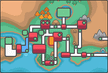
The Ruins of Alph were inspired by a place named Asuka, a tiny village 40 mins south of Nara (which is the city which inspired Violet city which is right next to the Ruins of Alph). The Johto region is the exact replica of Kansai Japan. The locations in the game all line up geologically when compared to the real life Japan. Even the Pokémon themselves link back to the real world. Heracross is based on the Japanese Rhinoceros Beetle, deer are only found in the region between Nara and Kyoto similar to how Stantler (The deer pokemon) is found in the routes between Violet City and Ecruteak City. So if everything connects back and makes sense, then what is Unown? This raises a new question, what if the answers to the Ruins of Alph are in real world, what if they are waiting to be discovered? What if they are two puzzle pieces waiting to be put together? Are they truly Unknown? Two caves of Asuka were made National Treasures of Japan, the tomb of Takamatsuzaka when it was discovered in 1972 as the first ancient cave with coloured paintings in Japan's history. On the walls of these ruins were paintings of depictions of mythical creatures like Genbu (the black tortoise), a tiger, a dragon and an unclear painting which resembled a bird. These are what inspired the paintings and puzzles in the Ruins of Alph. After the discovery of these tombs in Japan, the painted walls had to be sent for restoration due to growing mold. Following this, new dialogue was added in the remakes of Gold and Silver, mentioning how the restoration of the paintings has started.
Part 3 – Gold and Silver.
Ten years later, an even significant discovery was made, the Kitora Tumulus. First discovered in 1950 by a local, these tombs were not explored for another 10 years because of the lack of technology required. The caves were observed using fiber optic cameras, the paintings found in these caves were like nothing they had ever seen. Among them, was the painting missing from the Takamatsuzaka, the painting was of a legendary bird named Suzaku. Suzaka represents and is regarded as the guardian of fire, it is described as having five-colored, flame-covered plumage and is the mythical creature that partly inspired one of the main legendary Pokémon in the game, Ho-Oh. This connection is known by far less people. Ho-Oh, the mystical fire bird, said to be the ruler of legendaries, "Legend says it bestows eternal happiness upon all who behold it." The more known origin of Ho-Oh is it's inspiration from the Chinese mythological bird, Fenghuang. In Japanese, Fenghuang literally translates to Ho-Oh. This mythological bird has golden statues atop of temples in the city of Kyoto. The Shiny form of Ho-Oh is a nod to these golden statues of Fenghuang. It is considered the ruler of all birds, representing harmony, peace, and high virtue. Its form is a composite of different animals, often representing celestial bodies and virtues: head (sky), eyes (sun), back (stars), wings (wind), feet (land), and tail (planets). Originally, feng represented the male and huang the female, but it has evolved to represent a feminine entity paired with the masculine dragon. In the Ruins of Alph, there will be only one radio channel you can listen to the audio of which is made with broken bits of Ho-Oh's cry in the game. You are also required to have Ho-oh to enter a secret room of the Ruins of Alph. Ho-Oh has a mystical connection to the Ruins of Alph and Suzaku. Just like Ho-oh, Suzaku is a symbol of rebirth but also controls fire and represents the sun. Suzaku and Fenghuang share their remarkable feature of rainbow-colored feathers. The significance of Suzaku in Japanese culture is instrumental to understand Ho-Oh's connection to the Ruins of Alph. When the caves of Kitora Tumulus were explored further, scientists found one of the oldest star map to ever exist on the ceiling of the caves. On the right side of the star map was a depiction of the Sun that was referred to as 'Gold' and a depiction of the Moon on its left as 'Silver'. Does that ring a Clear bell perhaps? This is why the games were named Gold and Silver. Ho-Oh and Lugia being the primary legendaries of these games, they are always depicted as counter-parts and mirroring each other. Contrasting to how Ho-oh represents Fire, the Sun and the Sky hence its the main legendary for Gold version and, its counter-part Lugia is known as the Guardian of the sea, represents Water and the Moon and is the main legendary for Silver version. Lugia's wing flaps are known to create terrific storms, aware of the destruction that would be cause, it hides itself in the depths of the sea. They are inspired from these cave depictions from 1500 years ago. The day and night cycle was introduced to the franchise starting from these games symbolising the heavy importance of the Sun and Moon on the game's legendaries.
Part 4 – Kimono Girls.
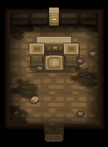
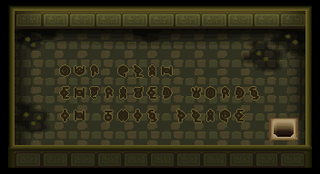
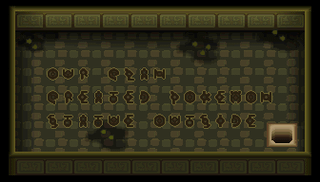
Another key part of the games are a group called the Kimono Girls. Even they have ties to the tombs of Asuka. When Takamatsuzaka tomb was first explored, researchers found paintings of 5 empresses known as Ladies of Asuka. They were people who played a significant role in the spread of Buddhism in Japan and they are portrayed as the Kimono girls in these games. Each of the Lady of Asuka is depicted in a different colour, which is why each Kimono girl in the game have different Eeveelutions and generally portrayed in different colours. The region of Johto is thematically and aesthetically rich. It combines the essence of traditional Japanese architecture with locations like Ecruteak city and Violet city, but also shows the boom in development Japan experienced during the end of the 19th century in 1999 when Gold and Silver originally released, with modern cities like Goldenrod. Its basically from a time where Japan was struggling to maintain its rich tradition and booming urban development. These games take you through time in a way and unites past and future together. In the Japanese Pokemon wiki, the Kimono Girls are said to be the descendants of a clan. In the games, the word 'clan' is mentioned one other time, in the Ruins of Alph's secret chambers, its written in Unown that 'Our clan created Pokemon statue outside'. Fifteen hundered years ago, there were 2 real clans in Japan which were in an intense conflict. The Soka clan which was pushing for Buddhism ended up winning. The Ladies of Asuka played a key role in forging Japan as a country at that period of time. The clan mentioned in the Ruins of Alph and the clan that the Kimono girls belong to is the same clan. Even the time periods line up perfectly within the game and reality. The 5 Kimono Girls are the Descendants of the 5 Ladies of Asuka.
Part 5 – Pokemon in the ruins.
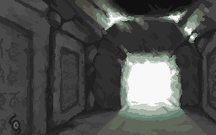
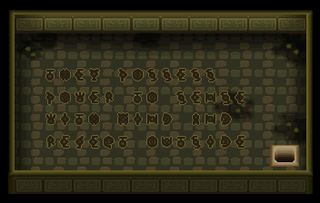
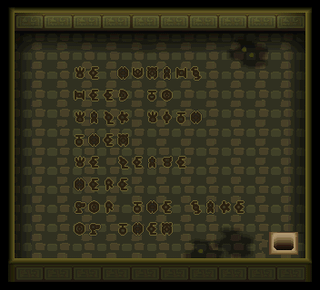
The Soundtrack inside the lower chambers of Ruins of Alph is a perfect personification of the ominous and mysterious atmosphere of this place. These ruins are like a time capsule from the past, capturing the time on it's walls written in Unown language. The stories they tell are legends now, the ancient paintings of pokemon needing to be assembled to reveal it's secrets. But the mystery and thrill they give us remains. The Pokemon that are found here other than Unown are Natu and its evolved form Xatu along with Smeargle. Natu and Xatu are mysterious Pokemon, whose dex entries talk about how it can see the past and future at the same time, similar to how you as a player are witnessing the remains of the past in the present. Smeargle is the painter pokemon that symbolises the ancient paintings of the walls. Everything about this place makes perfect sense.
Part 6 – Unown.
Coming to the explanation for the existence of Unown, we generally interpret its different form to be in the shape of the English alphabet and its even used to look like that in the games. But we question this Pokemon not just by its appearance but by its purpose, why does it exist? In the games they are not worth using as they are so weak you would struggle in any battle. But we can see that maybe Gamefreak (the company that develops pokemon games) designed this pokemon to question our general beliefs that influence our opinion on Pokemon. There has always been speculation for what is Unown inspired on. Taken from the youtube video mentioned below, the design inspiration for this pokemon maybe the ancient keyholes shaped graves only visible from the sky and built 2000 years ago in the 3rd century. These graves are 100s in number scattered across Japan and some of the largest tombs to be ever discovered. They visually resemble unown. But as the youtube video winds up their findings on unown, they and we realise something entirely different. The secret lies under a hill that overlooks Asuka, a tomb built in the 7th century. Its entrance close resembles the design of the Ruins of Alph . This is the Iwayama Tumulus. The walls of this tomb resemble the ones in the ruins of alph the most. There are rectangluar shaped stones making up the walls with patterns that seem random. Some people believe the markings mean something. These markings likely gave the idea for unown.
'Each one different, each one with or with out meaning. Nobody knows what these markings mean, they are truly unknown and that makes them fascinating. The purpose of unown might have been to motivate someone to explore the mysteries that are in the real world. They wanted people to visit these places and allow them feel what they felt. They wanted to someone to find all of it just like they were told as a child and that all of it was just as interesting and magical as the fantasy game they love. This mystery will never be solved. Because that is the point, life itself is a mystery, its been right infront of us, its been there all this time. Unown is simply the Unknown….'
I have taken these last few lines from the video itself as I personally felt the video such a incredible job in capturing the mystery of these places through these lines and the narrative. Kudos to the creators of this video!
Please do refer to the video for further reference to images from the locations mentioned.
Images from the game – Screenshots of Heart Gold and Soul Silver taken from Bulbapedia.
Content source – 'How I solved Pokémon's biggest mystery' YouTube video by BlueBoyPhin.
#Pokemon #PokemonGoldandSilver #PokemonHeartGoldandSoulSilver #RuinsofAlph #Ho-Oh #Lugia #Unown
by Ok_Bill9501