
Nintendo Switch 2 Editions are one of the Switch 2’s defining features. Up until now, Nintendo has maintained its release schedule of roughly one new game per month. But game development is long and costly, many recent titles have been from slightly smaller franchises – Star Fox, Rhythm Heaven, Yoshi – rather than the big hitters like 3D Mario and Smash. To fill in those gaps, Nintendo Switch 2 Editions of existing Switch games give titles a new lease on life with better resolution, performance, and sometimes even new content as well.
Though it’s not a big problem or anything, there is a small discrepancy with the way these Nintendo Switch 2 Editions are titled. Some get free updates but aren’t called a Switch 2 Edition, others get free updates and are called Switch 2 Editions, some do get a formal Switch 2 Edition but are still missing features… so today, we’re going over a whole bunch of Switch 2 Editions and talking about how odd their naming scheme is.
Games with free updates, but no Switch 2 Edition

This makes perfect sense if you’re a hardcore Nintendo fan, but it might be a little confusing if you just got a Switch 2 for the first time. A good number of games have Nintendo Switch 2 patches, but not Switch 2 Editions. And though the naming schemes are different, these are essentially the same thing – you get boosted performance and frame rates where possible.
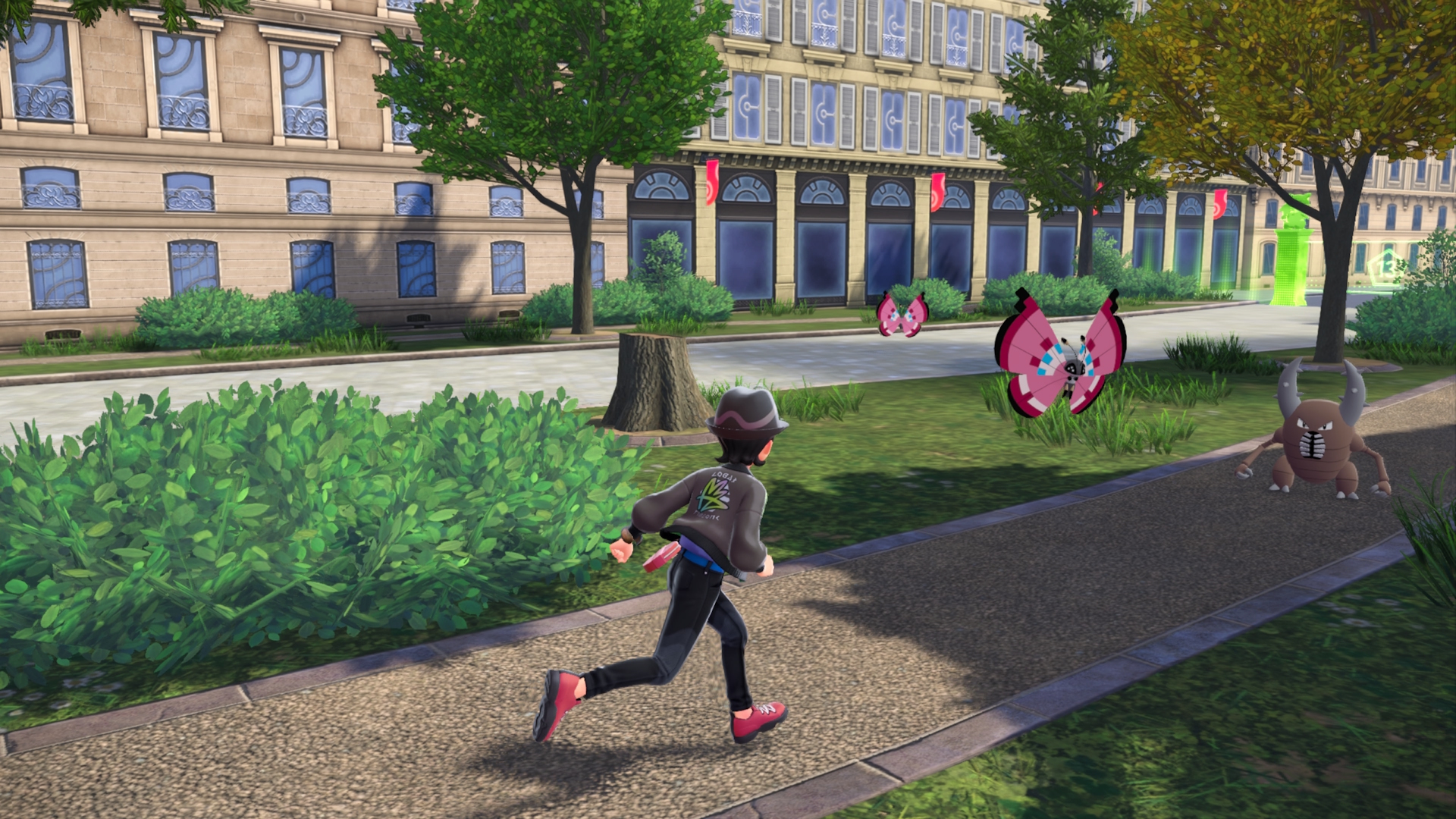
Splatoon 3, for instance, is a good example – it got a free Nintendo Switch 2 patch that increased its resolution. Super Mario Odyssey, ARMS, and Super Mario 3D World are a few more games that also received resolution boosts, but not formal Switch 2 Editions. Then you have Pokemon Scarlet and Violet, which does feature enhanced resolution, but it also features a much smoother frame rate. On Nintendo Switch 1, the games struggled to even maintain 30 frames per second, and on Switch 2 they maintain a smooth 60. Needless to say, Pokemon Scarlet and Violet feel like completely different games on the new console. They certainly don’t look like completely different games, but it’s a big improvement nonetheless. This winds up being kind of interesting – on Nintendo Switch 2, both Pokemon Scarlet and Violet and Pokemon Legends: Z-A have enhanced resolution and frame rates as their only Switch 2-exclusive features. But the former is a free update, and the latter is an extra $10 and actually does count as a Nintendo Switch 2 Edition despite having no new content otherwise.
Games with free updates that are Switch 2 Editions
We haven’t seen Nintendo do this just yet – it’s exclusively third parties. Cast n Chill, Hollow Knight, Silksong, and Ball x Pit are a few examples of games that do have formal Nintendo Switch 2 Editions, but are free to upgrade if you have the game on Switch 1. Most of these upgrades are just your typical performance and frame rate improvements, but for free instead of paid. That makes the Switch 2 versions of the games much more accessible!

$5 Switch 2 Editions
There actually aren’t very many of these. Just two major ones from Nintendo: Animal Crossing: New Horizons and Xenoblade Chronicles X: Definitive Edition.
The pricing here isn’t too consistent: Animal Crossing only includes a resolution bump; the frame rate remains 30 frames per second even on Switch 2. It also features mouse controls for decorating, a new megaphone item, and support for 12 players on a single island at once. That last one is interesting, because all 12 players need consoles, the game, and the upgrade pack in order for this to work. And then they have to arrive at your town one at a time, and you have to watch the flyover cutscene 11 times. Is anyone using that?
As for Xenoblade Chronicles X: Definitive Edition, its only new features are boosted resolution and frame rate, but it still costs $5 instead of $10 – as we mentioned earlier, Pokemon Legends: Z-A has those same features and costs $10 for the upgrade. Though this doesn’t have much to do with the price tag, the upgrade isn’t even a straight-up improvement: Xenoblade Chronicles X’s Nintendo Switch 2 Edition uses odd filtering software that heavily distorts characters’ faces as well as backgrounds, particularly if you’re playing in handheld mode.
It seems like $5 upgrades rarely offer new content, but when they do, it’s very small things. We’re just wondering why Xenoblade Chronicles X has a paid upgrade while the free updates for other games were, of course, free – especially considering those free updates didn’t add poorly-implemented resolution upscaling and were received just fine.
$10 Switch 2 Editions
Generally speaking, these Nintendo Switch 2 Editions only have a little bit of new content, if any at all. As mentioned, it’s strange that Pokemon Legends: Z-A is included in this category when its only new “feature” is enhanced performance. Metroid Prime 4: Beyond is in a similar category, though it does support 120 frames per second as well as optional mouse controls for aiming. Xenoblade Chronicles: Definitive Edition is a $10 upgrade as well, featuring the same performance and visual boosts as Xenoblade Chronicles X (but implemented better). In addition, though, it includes a new Nopon Grand Prix mode, Ether Jets that significantly speed up travel, and new voiced cutscenes. Likewise, Xenoblade Chronicles 2 and 3 (which aren’t available yet at the time of writing) feature new quests and event scenes as well, so it seems like they’re following Xenoblade 1’s upgrade precedent.
The Legend of Zelda: Breath of the Wild and Tears of the Kingdom are also included in this category, and they both include a new mobile app feature where you can listen to voice notes when you arrive at specific in-game areas. They definitely add lots of world-building, but we always felt that having to keep your phone unlocked and next to you sort of interfered with the immersion. Still, that plus the enhanced performance is a decent deal, especially considering that these upgrade packs are free if you’re subscribed to the Nintendo Switch Online Expansion Pack.
$20 Switch 2 Editions
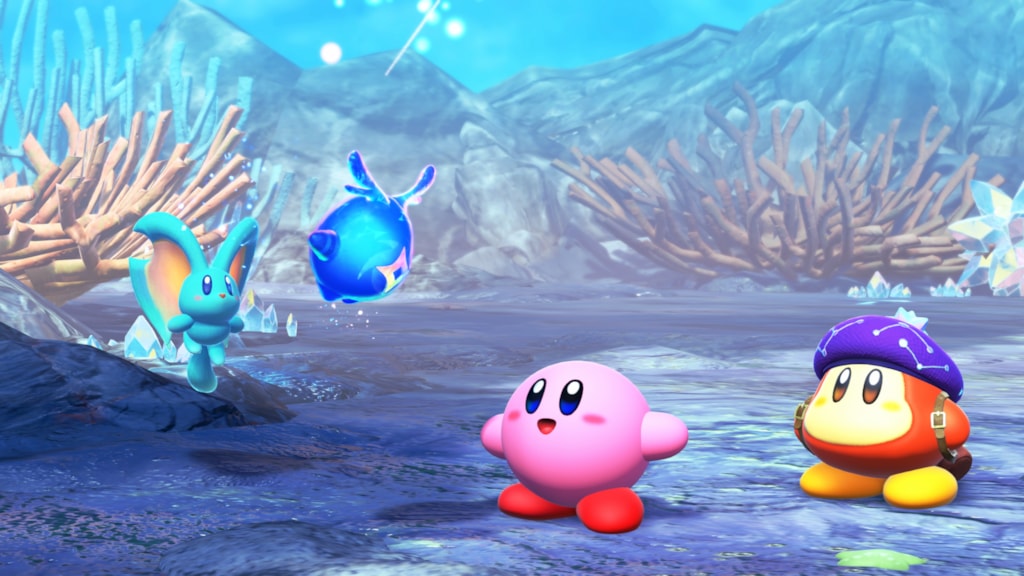
Nintendo has done a few of these so far, and all of them (except for one) do introduce substantial new content. Kirby and the Forgotten Land is probably the best example, introducing many new levels, a new final boss, and even a new arena mode in addition to performance boosts. The $20 price tag could be cheaper, of course, but it’s decently well-justified by the new content. Super Mario Bros. Wonder fixes a huge problem with the base game – lackluster bosses – by introducing new unique Koopaling battles in each world. It also adds Rosalina and Co-Star Luma as playable characters, and a bunch of mini-games to play with friends. Again, could be cheaper, it’d even be great if it were free, but the $20 price tag is at least somewhat justified by all the new content on offer.
Then you have Super Mario Party Jamboree’s upgrade, which costs $20 and arguably isn’t worth it at all. Mario Party and Super Mario Bros. Wonder do this weird thing where they split the game in two – the Nintendo Switch 1 version and the Switch 2 version. This is presumably done so that the Nintendo Switch 2 upgrade can maintain the ability to play online with Switch 1 users, but it winds up feeling really clunky and odd. For Mario Party, when the upgrade first launched, the Nintendo Switch 1 half of the Switch 2 Edition was completely untouched, meaning even though you paid for the upgrade the game would still look blurry stretched out on the Switch 2’s 1080p screen. The issue has since been fixed, thankfully. But the new Jamboree TV mode winds up feeling gimmicky and unnecessary, so most people playing Super Mario Party Jamboree will just want to stick to the default party mode. This upgrade would’ve gone over much better if it introduced new boards and mini-games to play on instead.
So overall, there’s some semblance of consistency between Nintendo Switch 2 Editions. $5 ones only add a tiny bit of changes, $10 ones sometimes only boost performance and other times add a good amount of content, and $20 ones often add substantial new content.
It’s still odd that we got so many free updates for Nintendo Switch games that aren’t counted as Switch 2 Editions, but they were still great to see – hopefully we get more, even though it’s somewhat doubtful now. We’ll no doubt see many more Switch 2 Editions over the course of the console’s life span. Which one do you want to see next?
Related


![Diablo 4 Switch 2 Release Date: Sept. 15, $69.99 [2026]](https://www.videospokemongo.com/wp-content/uploads/2026/09/1789273570-770x515.webp "Diablo 4 Switch 2 Release Date: Sept. 15, $69.99 [2026]")
