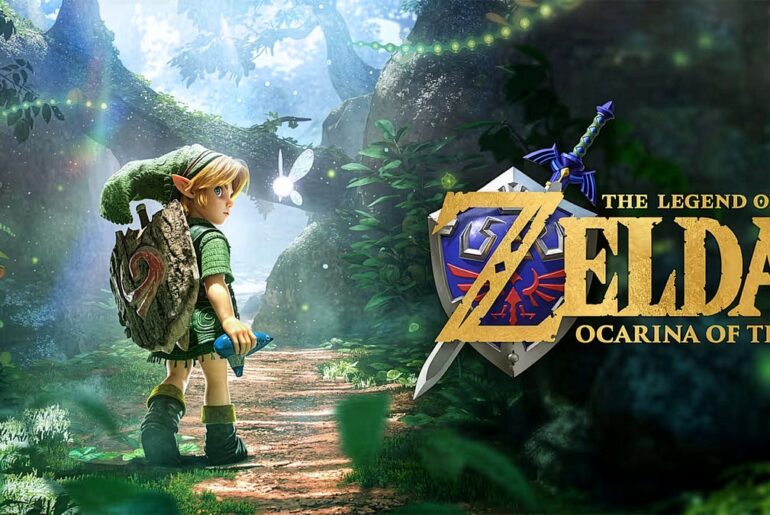
The Legend of Zelda: Ocarina of Time is almost universally accepted as being one of the great masterpieces of the video game medium. Many list it as the greatest game of all time. The Nintendo 64 original still ranks as #1 on Metacritic’s greatest games of all time list, with an average score of 99/100. Nintendo has ported and light-touched “remade” the game for other consoles (most notably the 3D version on the 3DS), but I don’t think people appreciate just how much of a creative risk this full-on, top-to-bottom remake was. If the development team dropped the ball on it, even slightly, the monumental reputation that the game has built over the years would have been undermined. Nintendo’s single most valuable game diminished. This was not a remake Nintendo could take lightly. And the good news is that they didn’t.
(As a side note, I am a little sad about the Metacritic thing. For several weeks, the Switch port of The House in Fata Morgana was actually sitting at the top of the rankings with a perfect 100/100 average score. Then a few critics clearly saw an opportunity to ruin the party with inane criticism like “you have to finish the game to fully appreciate it” and “it’s a visual novel”… but I digress).
Ocarina of Time surely needs no introduction. It’s as close to canon as we have in video games, and surely everyone reading this review knows the basics, that it’s an epic journey through time for both child, and adult Link, in his efforts to help the princess, Zelda, defeat the evil Ganondorf. Doing this requires Link to venture into a series of puzzle-filled dungeons, fight a gauntlet of creative boss fights, and then play ping-pong with Ganondorf. I’m not going to use this review to prosecute the virtues of the game again. It’s as good as a settled, objective truth that Ocarina of Time is well made, well paced, challenging and consistently interesting as we have. There are entire books that have been written about the richness of the game’s design, and even its narrative, which on the surface seems relatively simple, has enough layers that the game features prominently in one of those pop culture philosophy books.

Instead of treading over ground that is so well-trodden the grass and dirt is gone and all that’s left is the bedrock, I want to use this review to discuss the changes that have been made in the remake, and in a way contrast it with the remake of another game that has almost the same level of gravitas, Final Fantasy VII.
Square Enix took on an almost-incredible level of risk with the remake of its iconic JRPG by deciding to change so much about it. Yes, Final Fantasy VII Remake and its sequel vaguely follow the same plot beats as the original game, but as I discussed in my review, in some incredibly important areas the game actively subverts its ancestor. If Final Fantasy VII was a question, the remake was the answer. Both games shared a conversation, but they took a very different look at it.
Nintendo’s team, by contrast, were, in some ways, more conservative with the Ocarina of Time remake. The basics are largely kept the same. The maps are roughly the same. The story is consistent. If you memorised the original Ocarina of Time by playing it so often, you’re not going to be particularly surprised by the remake.

However, it’s important to note that this is a full and complete remake. To start with the most obvious, the game has an entirely new graphical engine, and it’s a stunning one. The world is vibrant with colour, texture, and that cinematic quality that Ocarina of Time on the N64 was clearly inspired by, but limited in its ability to execute. The soundtrack, equally, takes full advantage of modern technology, with each piece of music sounding better than ever (especially Gerudo Valley… always Gerudo Valley), and while I wasn’t overly convinced by most of the voice acting, its presence does add more texture to the eclectic characters that Link meets on his adventure.
Then there are the smaller changes, which are innumerable and for people that have played Ocarina of Time dozens of times, give the game a subtle change in how it feels to play that, for the most part, really works in its favour.
I do have a theory that the bulk of the changes have to do with making sure that Ocarina of Time doesn’t feel archaic to play. To explain: The original Ocarina of Time was designed around a controller that has a single control stick, and the limitations of the N64 hardware itself. Working around this resulted in some exceptional innovation, like Z-Targeting, which would become enormously influential in game development in general.

In other ways, the game design brilliance is now taken for granted in modern titles. Ocarina of Time was one of the first 3D “open world” experiences with all the trappings that entailed. Take, for example, the day/night cycle. This was enormously consequential to the game’s puzzles and exploration, but also something that players would not have been particularly familiar with at the time. Nintendo needed a way to gently ease players into an awareness that things do change at night, and the solution was beautifully elegant: The first time you enter Hyrule Field, you need to make your way to the castle at the far end. It’s almost impossible that you’ll be able to do that before sunset, and at night the drawbridge comes up and undead spring from the ground to attack you. After a harrowing night, dawn breaks, the drawbridge lowers, and you enter the castle town, now keenly aware that things can be different at night.
Modern players have no such issue, of course, but a day-night cycle that was too rapid would become distracting. So now there’s plenty of time to meander down to the city. Conversely, time continues to tick by in locations (like the castle town) where time was paused in the previous Ocarina of Time. Elsewhere, a combination of greater control over the camera and the greater detail offered by the graphical upgrade means that Nintendo needed to redesign some of the puzzles. On the UI side of things, there is now a quest log to help prevent players from getting lost. There’s a jump button for Link now, and the freedom to jump anywhere factors into environmental design. There are dozens and dozens of these small changes that will likely go unnoticed by players who have played Ocarina of Time just once or twice, but will be very noticeable to the veterans.
I have little doubt that those veterans will quibble with one or two of the decisions, but the overall impression that I got from the changes was that they were all very smart, and purposeful, and, perhaps most importantly, mean that the remake will completely sidestep that accusation that it has “aged poorly.” Possibly the only area that will attract that accusation now will be the world size, particularly with the remake launching within days of Grand Theft Auto VI, which will likely be (quite literally) hundreds of times in size. But then Ocarina of Time was never truly an “open world” game in the way we define them now, and Nintendo has taken steps to make the largest open area – Hyrule Fields – seem more full of energy and incentives to explore.
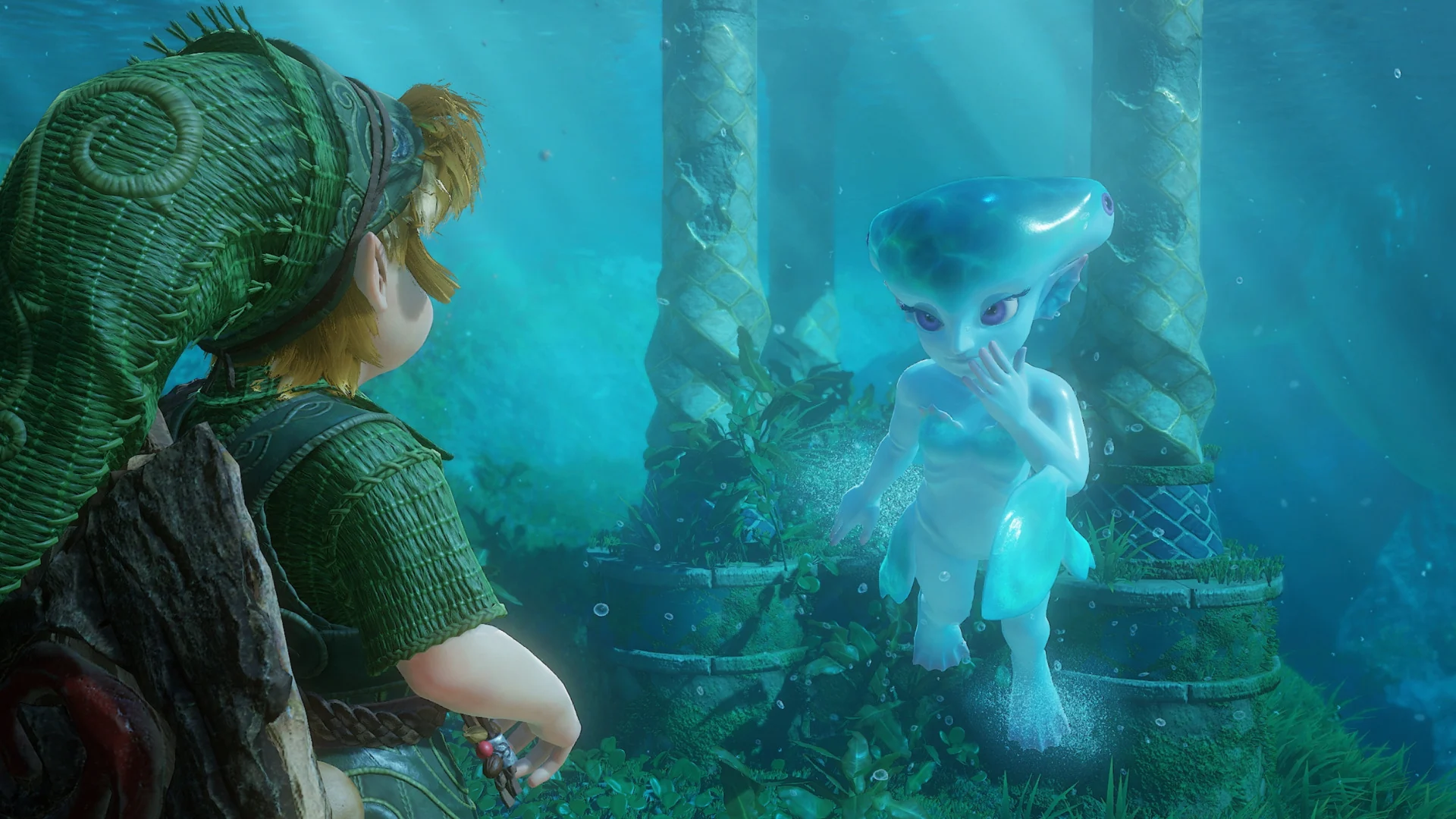
Nintendo has done right by its greatest contribution to global art and culture. I doubt that the Ocarina of Time Remake is going to replace its forebear at the top of the Metacritic rankings, for the simple reason that the entire games industry is in a different place now. But Nintendo has effectively turned its 28-year-old classic into something that will feel modern to a new player, thus ensuring that the game will continue to remain relevant within the general discourse for another few generations yet. And now, between Final Fantasy VII and Ocarina of Time, we have some fascinating and deeply contrasting case studies for how publishers can “remake” their most valuable properties in a way that adds, rather than detracts, from the base provided by the original.