This article has been translated from the original Japanese content.
This interview was conducted before the game was released.
In this 24th volume of Ask the Developer, an interview series in which developers convey in their own words Nintendo’s thoughts about creating products and the unusual details they hone in on, we’re talking to the developers behind The Legend of Zelda: Ocarina of Time, a Nintendo Switch 2 exclusive game that launches on Thursday, November 5.
Check out the rest of the interview
Part 2: The visuals may change, but the experience does not
Now, I’d also like to hear from the core members of the development team for this game. Could you each introduce yourselves?
HokWai Ng (referred to as Ng from this point on): Hello, I’m HokWai Ng, the director. My role was to propose the core development approach for this full remake of The Legend of Zelda: Ocarina of Time and oversee the project as a whole. My work on the Legend of Zelda series began with The Legend of Zelda: Tears of the Kingdom.
Aya Shida (referred to as Shida from this point on): Hi, I’m Aya Shida, and I served as the art director. As the person responsible for the visuals in this game, I established the direction for the art and design and oversaw the visual development as a whole. I’ve been broadly involved in character development, including design and modeling, since The Legend of Zelda: Breath of the Wild, and I served as a character lead on The Legend of Zelda: Tears of the Kingdom.
Hiroki Taguchi (referred to as Taguchi from this point on): Hello, I’m Hiroki Taguchi, the program director. I joined the Legend of Zelda team to work on The Legend of Zelda: Breath of the Wild soon after joining Nintendo as a fresh graduate. As a programmer, I’ve worked on areas such as in-game mechanics and cutscenes. For this game, my role expanded to overseeing development from a broader perspective.
Masato Ohashi (referred to as Ohashi from this point on): Hi, I’m Masato Ohashi. I was one of the sound directors and the music lead. For this game, I composed background music, conducted quality checks, and coordinated the music production as a whole. I also composed background music for The Legend of Zelda: Tears of the Kingdom and The Legend of Zelda: Echoes of Wisdom.
So, all of you have worked on some of the more recent titles in the Legend of Zelda series. How did you feel when you learned that you’d be working on this game?
Ng: I was really surprised to be given the opportunity. At the same time, though, I was incredibly excited. I played the original Nintendo 64 version of The Legend of Zelda: Ocarina of Time when I was in high school, and I was blown away by it. I thought to myself, “This is unlike any game the world has ever seen before.” As Aonuma-san said, The Legend of Zelda: Ocarina of Time occupies an especially important place in the Legend of Zelda series. But I think many players experienced the series for the first time with The Legend of Zelda: Breath of the Wild. With that in mind, I wanted to offer players across generations a fresh opportunity to experience the appeal of The Legend of Zelda: Ocarina of Time.
Shida: I played the Nintendo 64 version for the first time after joining this project, and I was amazed that a game this polished had been created 28 years ago. It also dawned upon me how challenging it would be to use today’s technology to recreate something that’s tied to so many different player memories.
Taguchi: I hadn’t played the original at the time of its release either, but I was aware of its reputation as a legendary title. I was hoping there might be another remake someday, but never in a million years did I imagine I’d end up working on it myself. (Laughs) It was a surprise, but I knew that working on such an important title came with a great deal of responsibility, and I went into the project fully committed.
Ohashi: I joined the development team a little later than the others here, but I was thrilled to have the opportunity to work on this title. At the same time, I was very conscious of the significance of Kondo-san’s work when it came to the music. Of course, people who played the original have memories of the game itself, but they likely have memories tied to its sound as well, and it boasts many pieces of music that shine just as brightly today as they did all those years ago. With that in mind, I felt that working on the sound would be a very delicate task, as we would have to be careful not to disturb the memories that players still carried with them. I felt equal parts excitement and apprehension.
Taguchi: The original really was so intricately crafted and so delicately balanced that I felt the whole thing might fall apart the moment you removed even a single piece. If we meddled with every little thing just because it’s a remake, it would cease to be The Legend of Zelda: Ocarina of Time that everyone knows.
Ng: The first step in developing this game was locking down our approach. I really love The Legend of Zelda: Ocarina of Time, and I have so many personal memories of it. I thought the same must be true for everyone who played it back then. A hundred players would have a hundred different memories of the game. I didn’t want to spoil any of those memories. And unlike open-air titles such as The Legend of Zelda: Breath of the Wild and The Legend of Zelda: Tears of the Kingdom, where players can seamlessly explore vast maps, The Legend of Zelda: Ocarina of Time has a special appeal that comes from its more self-contained structure. So we decided to rebuild The Legend of Zelda: Ocarina of Time using today’s technology, guided by the principle that “the visuals may change, but the experience does not.”

Earlier, Fujibayashi-san mentioned that he had asked the development team to first decide what to change and what to leave unchanged. So this specific approach of carefully refining the game with today’s technology while preserving what was important came from the newer members of the development team.
Aonuma: That’s right. The staff members and technology may be new, but the heart of the game remains unchanged…
Now, I’d like to turn to some of the ways the game was updated and refined. The art style in particular made a strong impression on me. Could you tell us how you arrived at it?
Shida: When we first considered how to leverage the capabilities of Nintendo Switch 2 to explore new forms of visual expression, a fairly natural direction seemed to be to create a richly detailed world that felt as though it could truly exist. But our goal wasn’t simply to make everything look realistic. Hyrule, the setting of The Legend of Zelda: Ocarina of Time, is beautiful, but it also feels somewhat dark. By contrast, many of the characters who live there are colorful and quirky. I felt that this contrast was what gave The Legend of Zelda: Ocarina of Time its mysterious, almost dreamlike charm. So for this game, we wanted to rebuild Hyrule as a rich, dense world that felt as though it could truly exist, while retaining the feel of the original. At the same time, we wanted its colorful and quirky characters to feel like a natural part of that world. Figuring out how to strike the right balance became one of the main themes of the art development.
To help the team understand what we were aiming for, early in development we used phrases like “a puppet-show feel” and “the analog feel of practical effects films” as keywords. Neither puppet shows nor practical effects films reproduce reality exactly as it is. Even so, both create a convincing sense that the characters truly exist within their respective fantasy worlds. We also felt that there was some overlap between these forms of expression and the distinctive nostalgia evoked by the original game. We began by drawing sketches of Link, Zelda, and the other characters. At the same time, to show the kind of world they would inhabit, we created a 3D model of the Great Deku Tree that looked truly alive, carefully adjusting the lighting and textures. We then presented the concept to Aonuma-san, explaining that we wanted characters like these to blend naturally into a world like this.
Slide 1 of 2
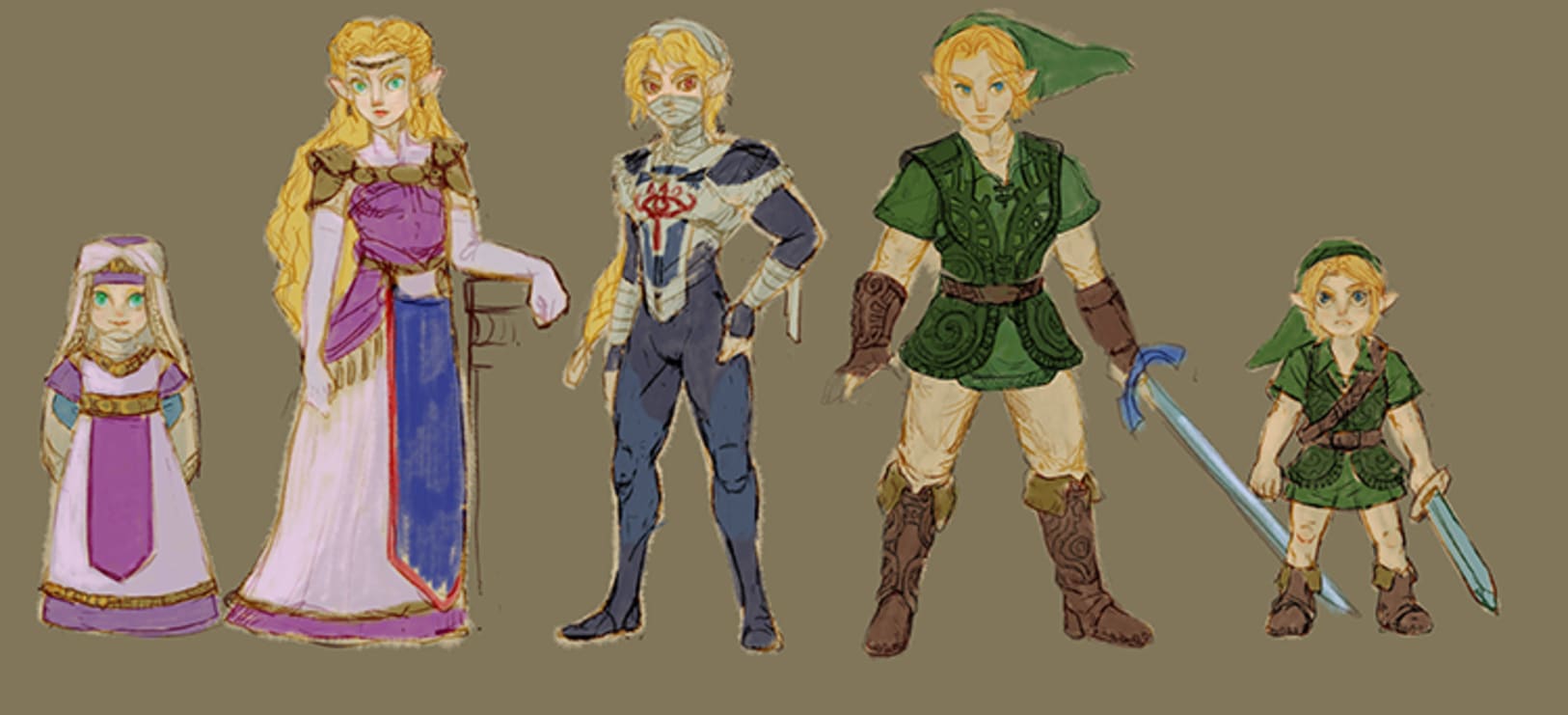

Aonuma: It’s curious, isn’t it? Back when we were developing the game for Nintendo 64, we thought we were making something cutting-edge for the time. We weren’t trying to create anything nostalgic. But after all these years, the current development team feels a certain sense of nostalgia when they look back at the original. And their efforts to express that nostalgia led them to an analog, puppet-show-like feel. As one of the original developers, that progression made sense to me.
So this art style was also part of rebuilding the game based on how you interpreted the original.
Shida: We felt strongly that changing the original designs was not to be taken lightly. The original designs and the new ones look very different when placed side by side. But we wanted to preserve the characters’ familiar presence, including the impression they gave from a distance, so that players would feel they were still the same characters they remembered, even after 28 years. Once we felt confident that this approach would work, we encouraged the designers to draw freely and explore what designs unique to this game might look like.
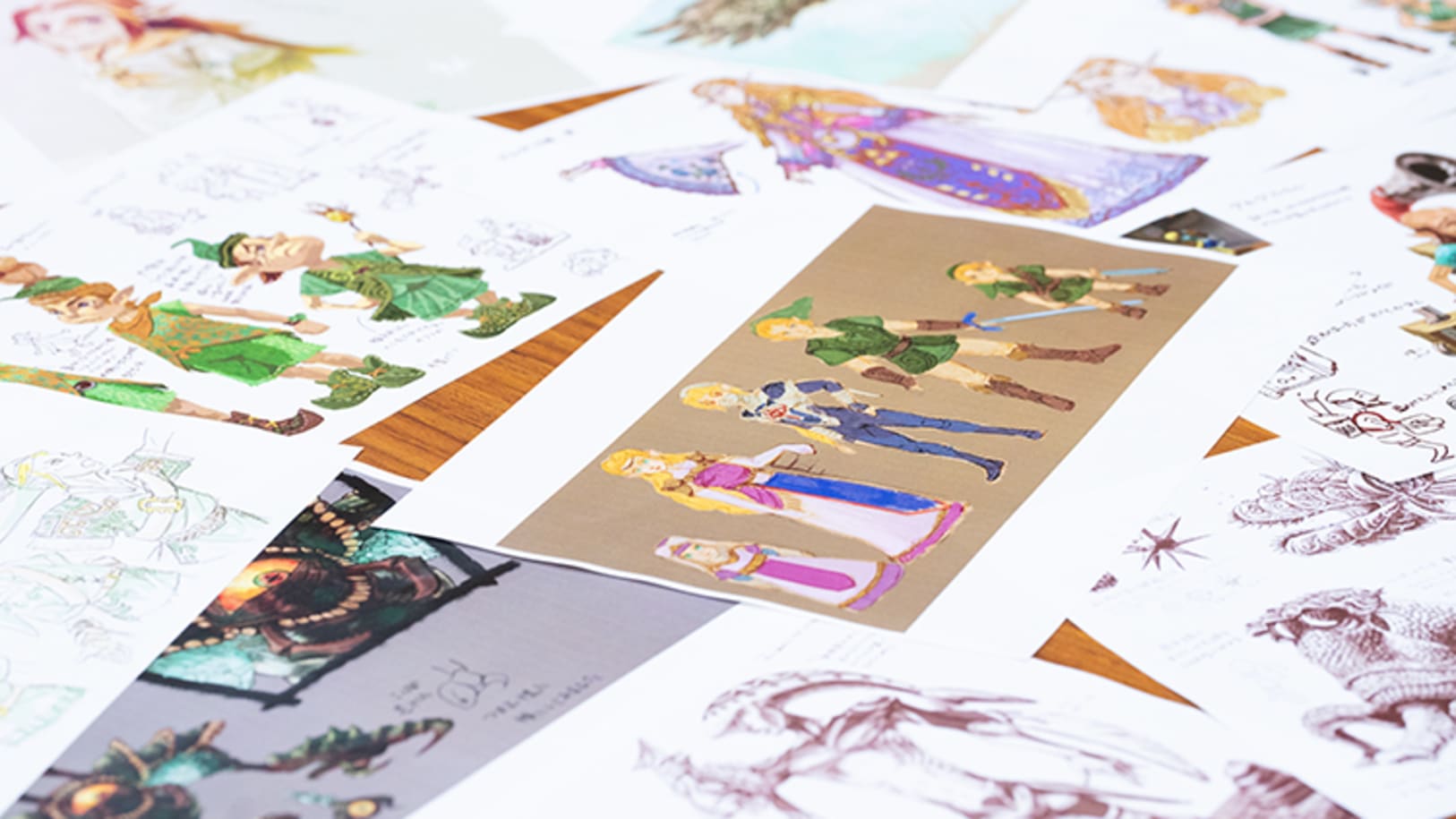
That’s true. None of the sketches simply look like more realistic versions of the original designs. They feel new, while still capturing the distinctive qualities of each character.
Fujibayashi: Back when games were being developed for Nintendo 64, there were limits to what could be expressed in-game. With those limitations in mind, the developers chose to exaggerate the characters’ movements and defining features so that their distinctive qualities would come through. But if we recreated all of that precisely with today’s technology, it might look a little creepy. (Laughs) I imagine it was quite a challenge to strike the right balance while still preserving each character’s individuality. A lot of attention also went into the textures of the characters’ clothing, didn’t it?
Shida: That’s right. Take Young Link’s clothes, for example. If the fabric looked too neat, as though it had been machine-woven, it wouldn’t look like something the children living in the forest had made themselves. It just wouldn’t feel believable.
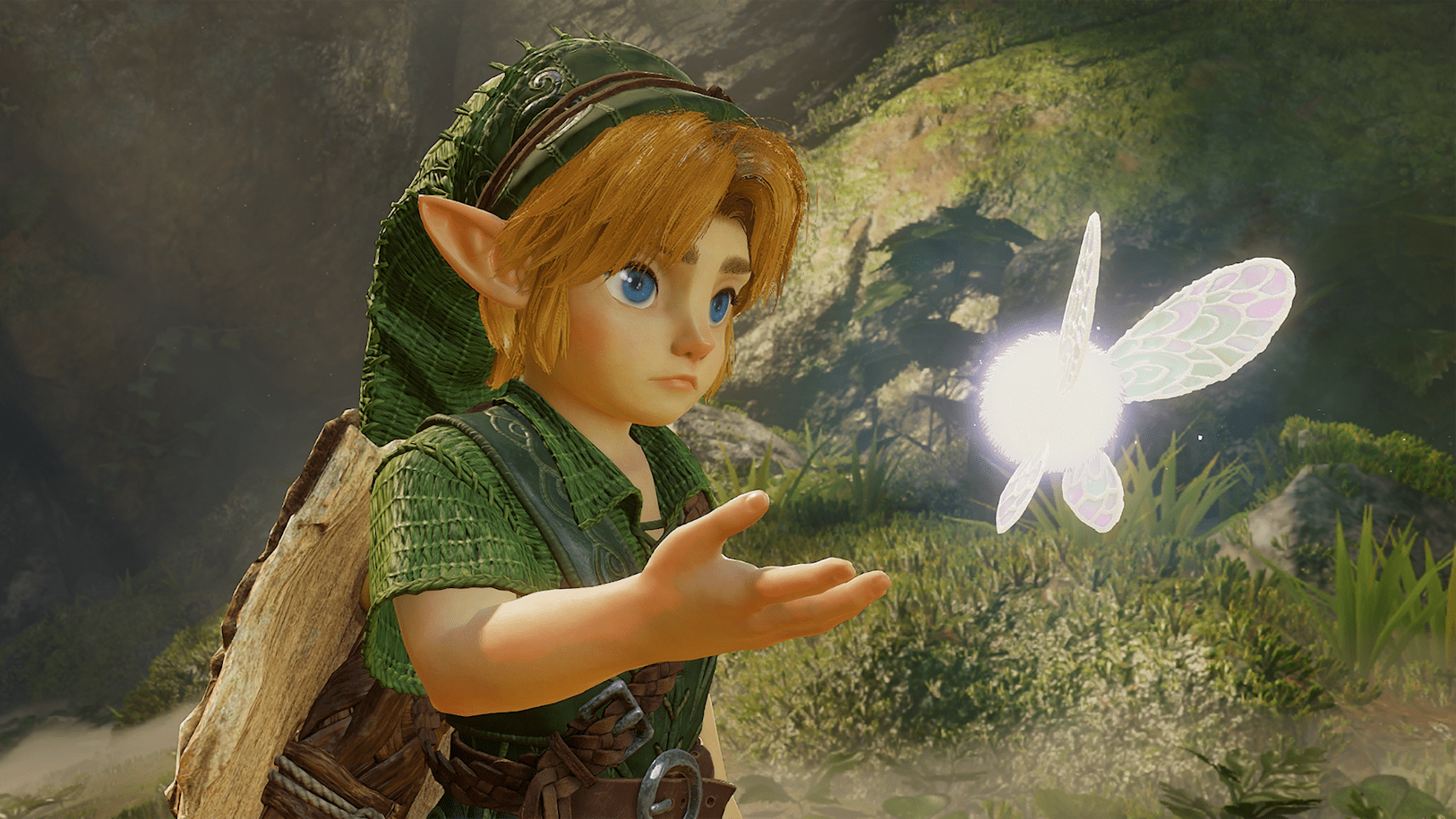
Shida: So we started by asking what kind of fabric those children might actually weave and wear. We looked at materials in museums and even experimented with making our own fabric from thread to get a better sense of what it should be like. For this game, the hardware allowed us to depict that level of detail, but that also meant we needed to do our research until we had a clear idea of what we wanted to create. As a design team, we often talked about imagining the story behind every object in the game as we created it.

That’s a lot of attention to detail. After that, the programmers need to implement everything created with that level of detail and make it work in the game, right?
Taguchi: When Shida-san and the art team first showed us what they were aiming for, I was convinced. “Yes, this is it.” It just felt right. This wasn’t simply about making the game look better. It was about reinforcing the sense that the characters really existed within this rebuilt world. I realized that this was the kind of rebuilding only today’s technology could achieve. So we kept layering one element on top of another to create the sense that this world truly existed, from the characters’ appearance and behavior all the way down to how grass responds in the overworld. The biggest headache, honestly, was the sheer number of elements we had to create. (Laughs)
Ng: As Fujibayashi-san mentioned, games today are often developed with efficiency in mind. But when you look at how many characters and enemies there are in The Legend of Zelda: Ocarina of Time, not to mention the sheer amount of text, you realize that this game is very much a product of its time. There’s just so much packed into it.
Aonuma: The word “efficiency” wasn’t in my vocabulary back then. (Laughs)
Ng: But we didn’t want to change any of that. So when it came to both design and implementation, we took great care to work on each character individually. Each character has a personality of their own, along with movements that are unique to them. We went back to the original and looked carefully at each character, asking who they were, why they were in that particular place, and how they moved. We then used those learnings to rebuild them one by one.
Fujibayashi: Every aspect of the original The Legend of Zelda: Ocarina of Time was created with a remarkable level of craftsmanship. I think we carried that spirit into this game by investing the time and resources needed to get every detail right.
I also felt that the overworld where the adventure takes place had been visually refined for a modern era while preserving the original experience. The familiar feel of the game and the new visual presentation seemed to come together very naturally.
Ng: That was something we cared a great deal about. For example, Kokiri Forest lies near the Great Deku Tree, and beyond the forest, Hyrule Field opens up before you. We didn’t want to change the feel of each location or the way the locations connected with one another, both of which are so characteristic of The Legend of Zelda: Ocarina of Time. So this time, as in the original game, we chose not to make the entire world seamless, instead using separate maps for different areas. We wanted each new area to bring the same sense of excitement that players experienced in the original. We hoped that moving from one map to another would provide a natural point of transition, giving players a chance to reflect on their adventure so far while building anticipation for the next part of their adventure awaiting them in the next area. We also wanted to capture the excitement of thinking, “I’m going to explore this world.” So we asked the artist who had created the illustrations for the Nintendo 64 version to draw a new map for this game.
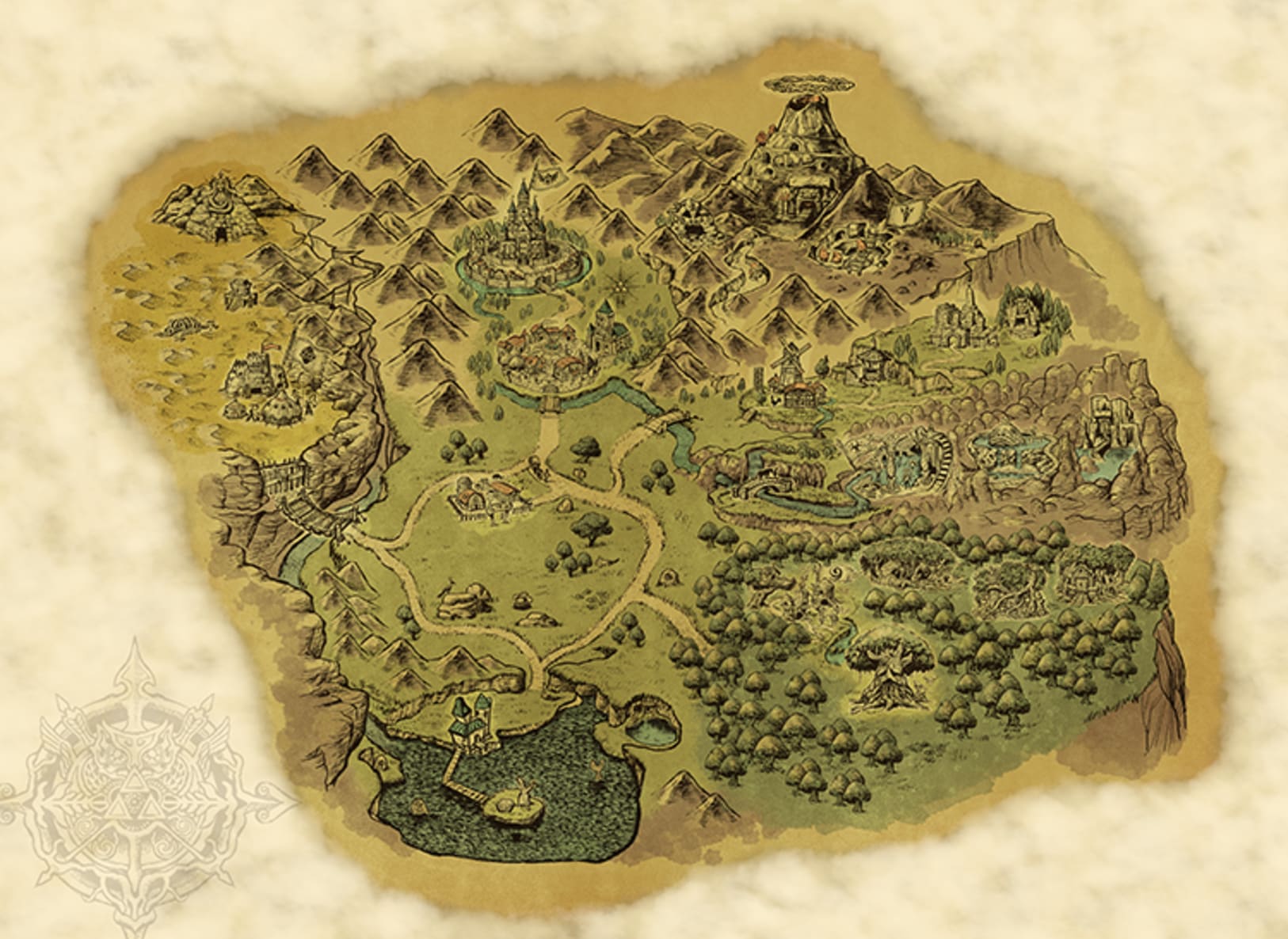
Shida: Getting the visual balance right was especially challenging in large areas like Hyrule Field. We wanted the scenery to feel vast and beautiful, but we also had to avoid giving players the impression that they could go anywhere they could see, even beyond the mountains. So we gave the areas that could actually be explored a high level of detail, used slightly less visual information in inaccessible areas so that they would be seen as distant scenery, and deliberately enlarged landmarks such as the castle and windmill, creating variation in both detail and scale throughout the landscape. We wanted it to be clear just from looking at the screen that “breaking this might reveal something,” or that “this is a place to take in the view,” without having to explain it. We wanted to preserve how it felt to explore the original map while using today’s visual capabilities to make the world denser and more detailed. That was the approach we took to creating this game’s overworld.
Parts 3 and 4 coming November 3!

Animated Blood, Fantasy Violence